With 35mm you press the shutter – and simply don't know what you've got. No screen, no preview, no instant verdict. With my first films it took two years before I could see what was actually on them. We're so spoiled by immediate results that you forget what it feels like to simply not know.
Flying Blind in the Changing Bag
The first big challenge is getting the film out of the canister and into the developing tank in complete darkness. After reading various guides I loaded everything into my changing bag and got started. In theory, in my head, it couldn't be that hard. Reality usually looks a little different.
Just opening the canister – I didn't buy a proper tool, just used a bottle opener – was harder than expected in the dark. What worried me more was cutting the leader that every film has. Spoiler: all fingers still in place.
Like so many things, it just takes practice. I wanted to develop two rolls straight away, and the second one already went a bit smoother. Far from perfect, but faster than expected after roll one.
The First Small Disaster
I noticed it immediately after taking everything out of the changing bag. Clearing away the opened canisters, I could barely believe my eyes: I'd loaded two different films into the developing tank – one ISO 100 and one ISO 400. No fixing it now, since I couldn't even tell which was which anymore. And unfortunately I can't see in the dark.
After some research: acceptable. Not ideal, but fine for the first two test rolls. Especially since black and white forgives more than I initially thought. Learning by doing – next time I'll pay more attention. Or just use fewer different films.
20 Degrees – Easier Said Than Done
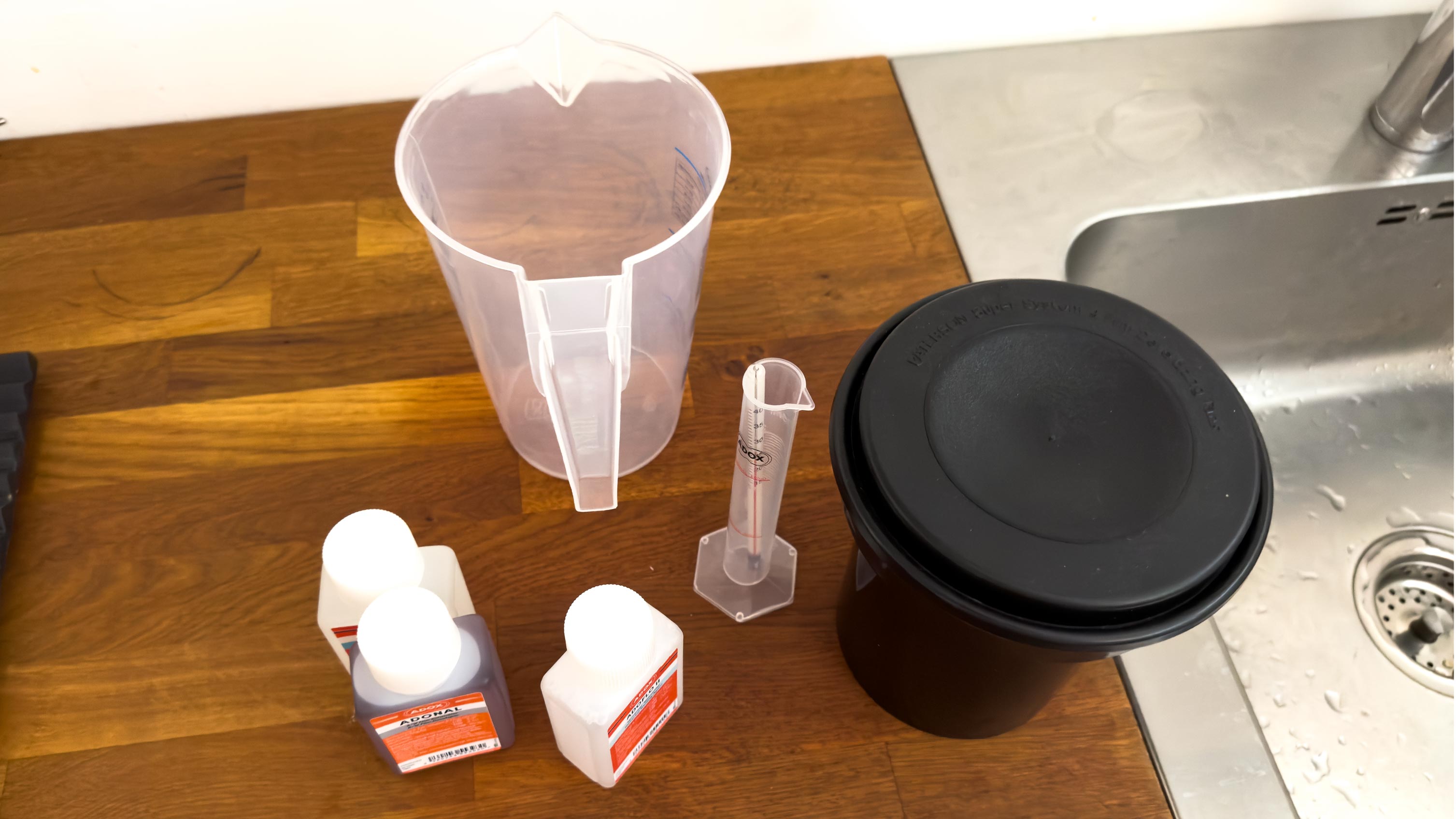
Getting the water to the right temperature was harder than expected. I kept adjusting the tap until I'd lost track of how much water I'd already used. Eventually it worked. Mixing the chemicals was almost the easiest part. And then: timer on, rotate the tank at regular intervals, pour out the developer, rinse, fixer in, and so on. The process itself isn't actually that complicated – you just have to push through it once.
The First Self-Developed Photos
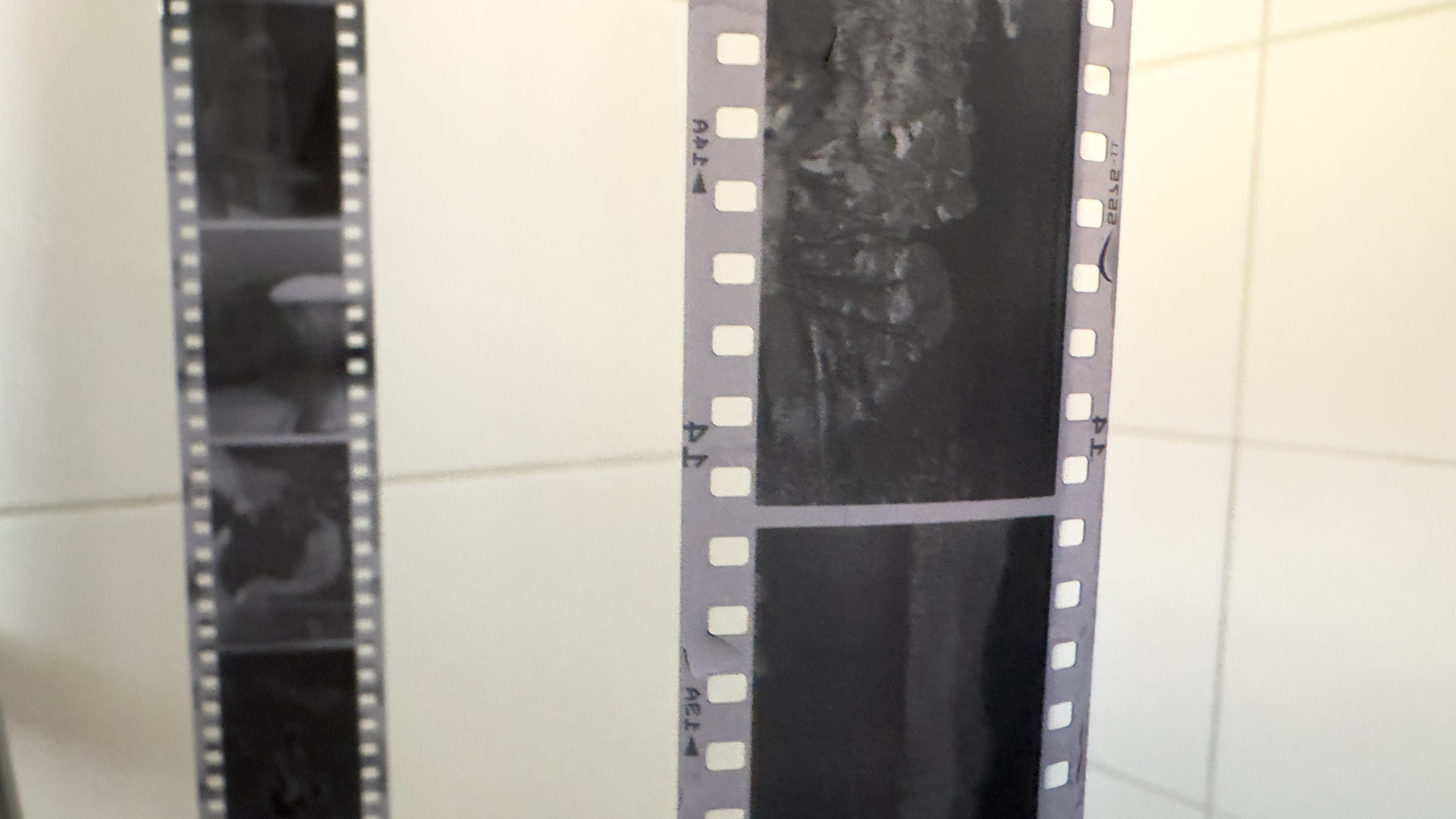
The tension built with every passing minute. Then the big moment: tank open, negatives out. Hung up with clothes pegs on the shower curtain rail, and the first proper look.
I was impressed – not because of the subjects or the technical quality, but because I'd made captured light visible myself. No pixels, no laptop.
Hung negatives are just the beginning though. Without a scanner the image stays a negative – visible, but not really tangible. iPhone photographed onto an iPad, Lightroom, invert the negative – and suddenly you see the actual image for the first time. That's a moment in itself.
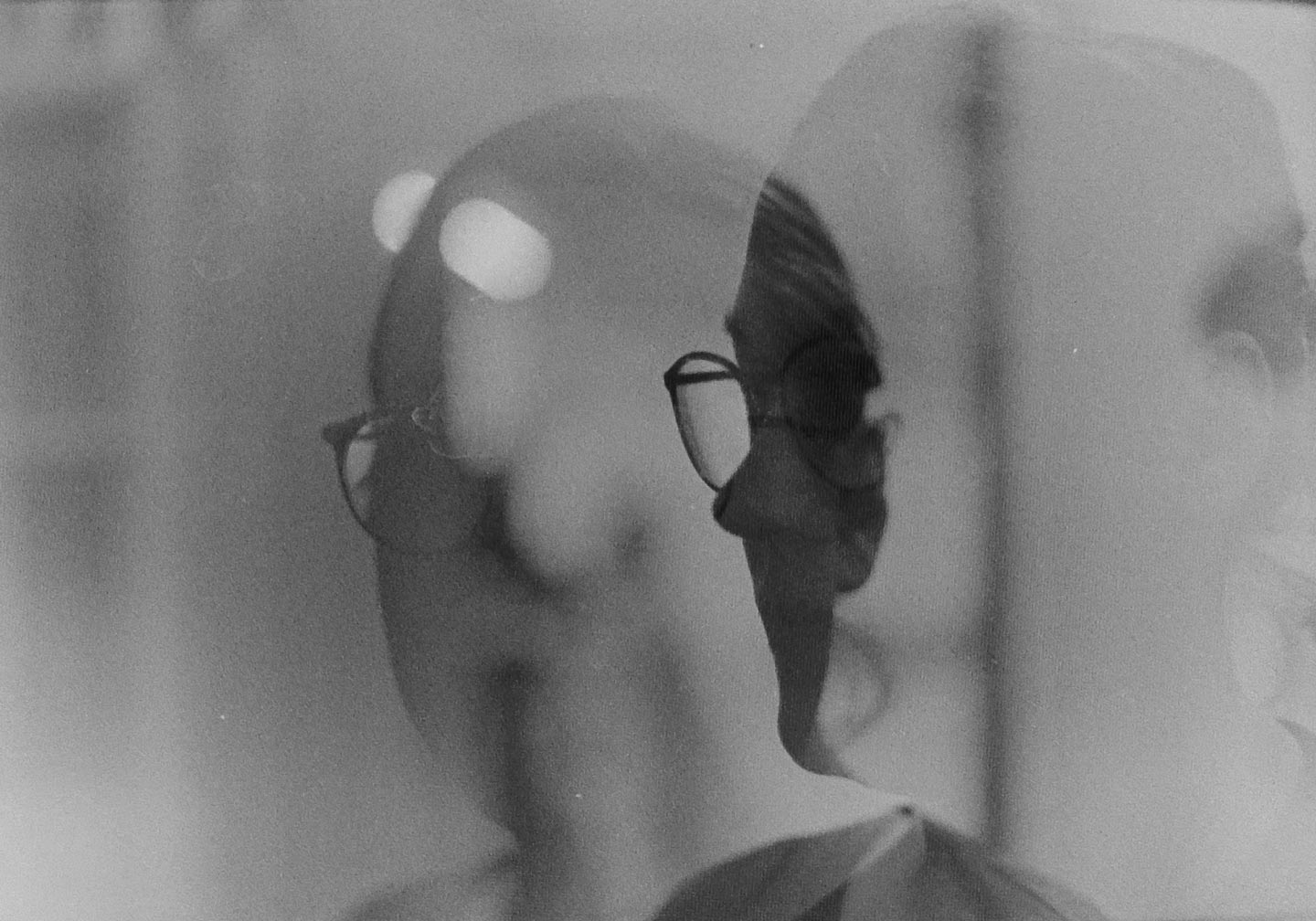
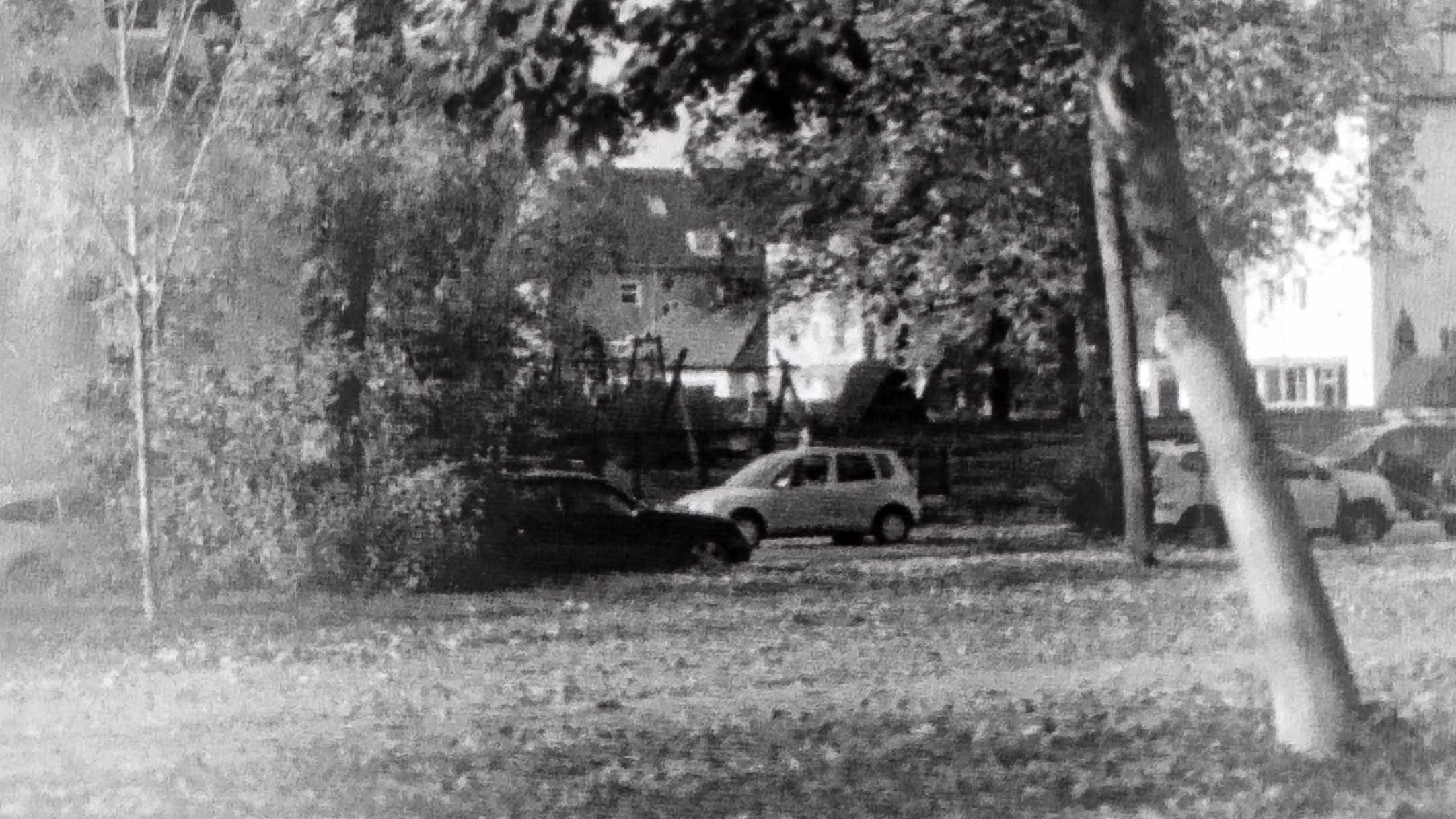
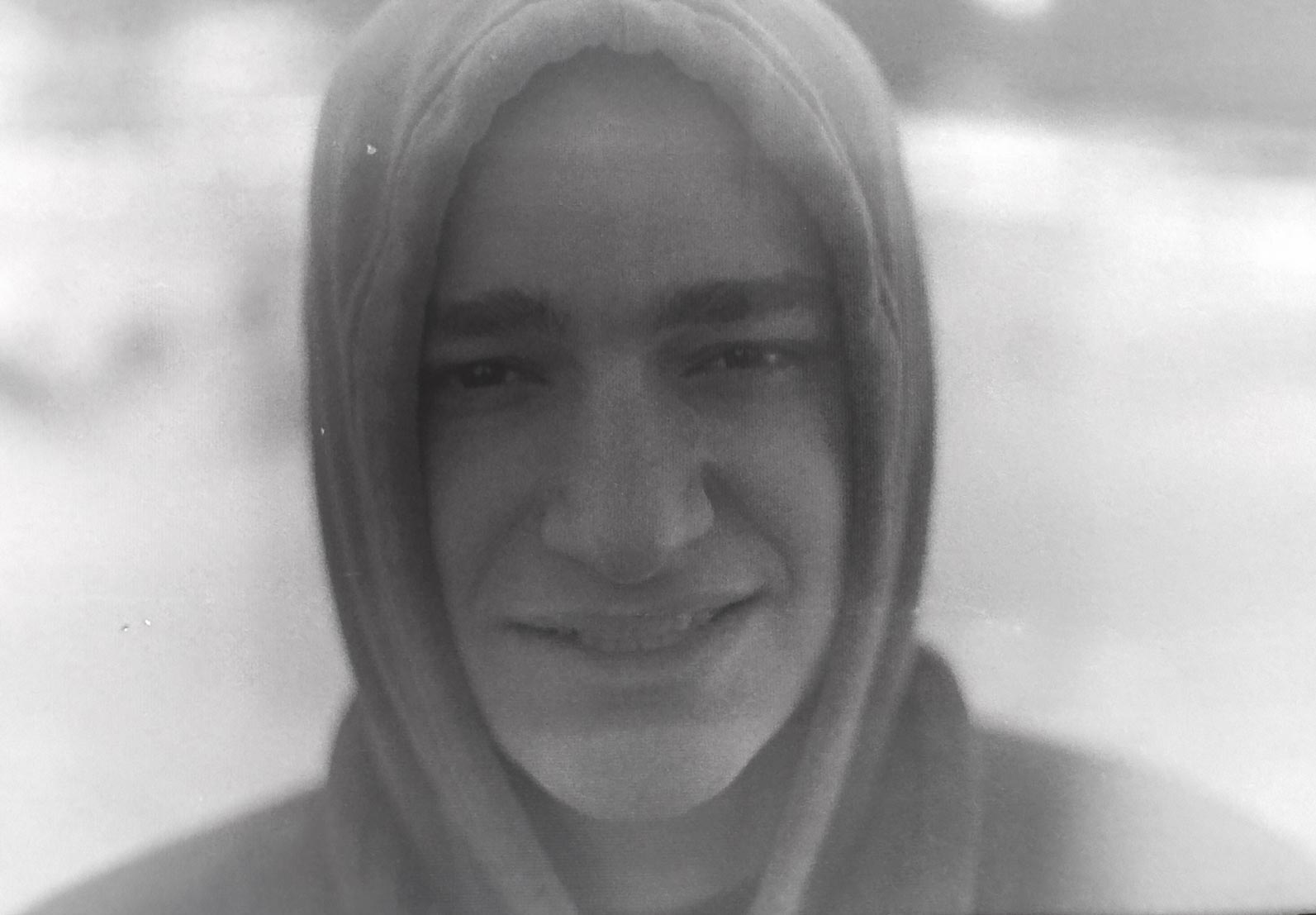
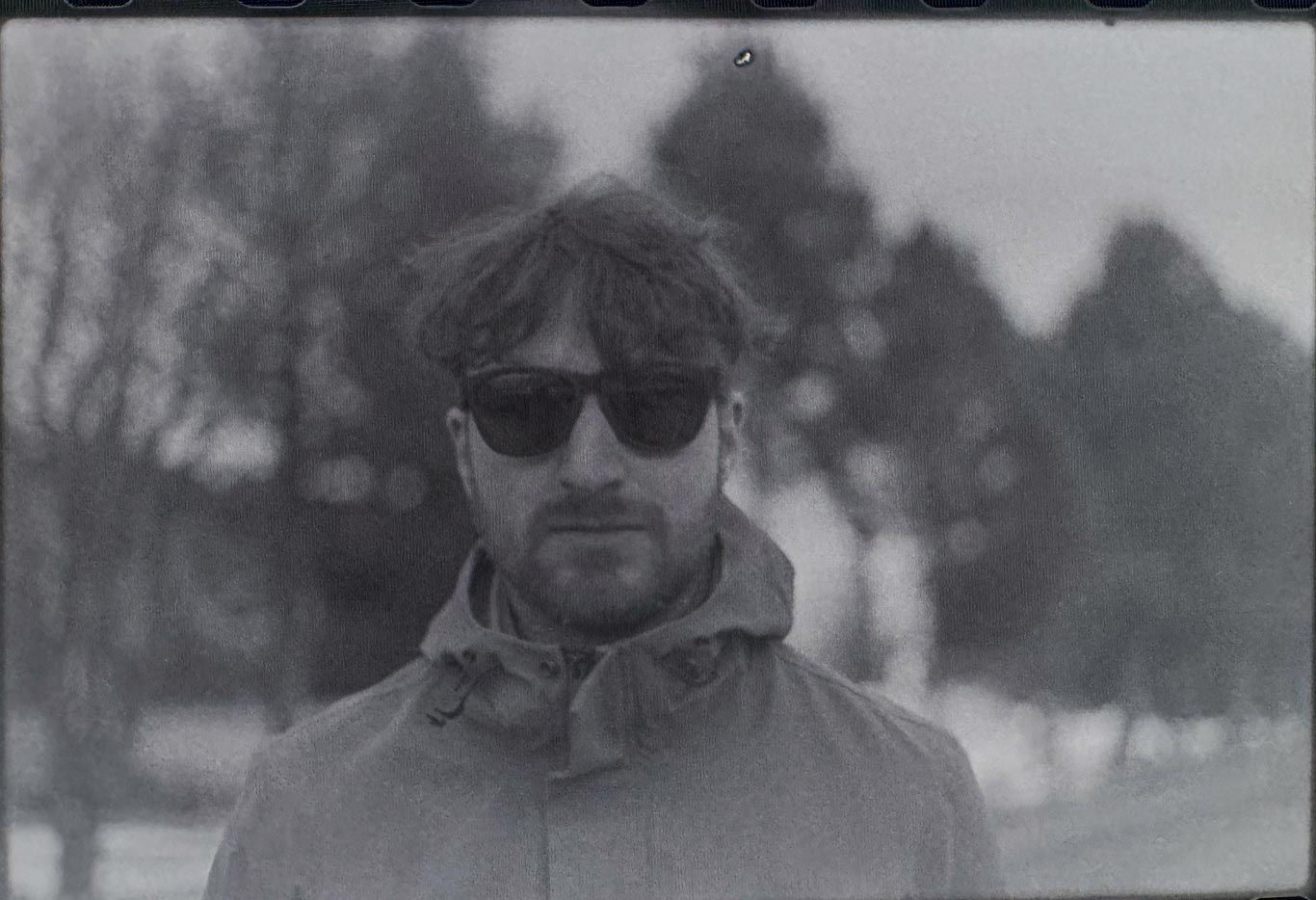
And then after scanning, the first image on screen: the artefacts, the imperfections, so flawed it looks wonderful. Somehow old, like from another era. The portrait of my brother. A double exposure I never planned that works anyway.
It feels completely different from a good image in Lightroom. The journey from the idea, the determination to see it through, to the finished negative – that's something else. And not knowing what's on there makes it even better.
Two rolls from the US are already waiting in the tank. This time with the right ISO values together. I can't wait.
First Results