It all started quite reasonably. The deeper I got into digital photography, the more I wanted to try shooting analog. Away from bits and bytes, toward real craft. I didn't just want to press the shutter and find the finished file on my SD card — I wanted to understand the whole process, from loading the film to holding a finished print fresh out of the chemicals. That was over a year ago. Part 1: The hardware.
Digital Overkill and the Magic of 36 Frames
At first, I thought the whole idea was a bit silly. You give up the convenience of a digital camera, only to scan your images at the end and post them on social media anyway. On top of that: more effort, higher costs.
And yet the subject kept pulling me in. I kept imagining these moments: not knowing right after pressing the shutter whether the shot worked. Watching the negative develop. And finally — probably the most magical moment in all of photography — watching an image appear on paper as the chemicals bring it up from nothing.
Romanticized? Absolutely. But I found this long-term project irresistible. Photography as a real craft, the way it was originally meant to be.
Canon Loyalty and the Minolta Affair
I didn't want to give up everything all at once. So it was clear to me early on that my first analog camera should have an automatic mode, or at least a built-in light meter. There's no shortage of videos and articles online — and I fully intended to stay loyal to Canon.
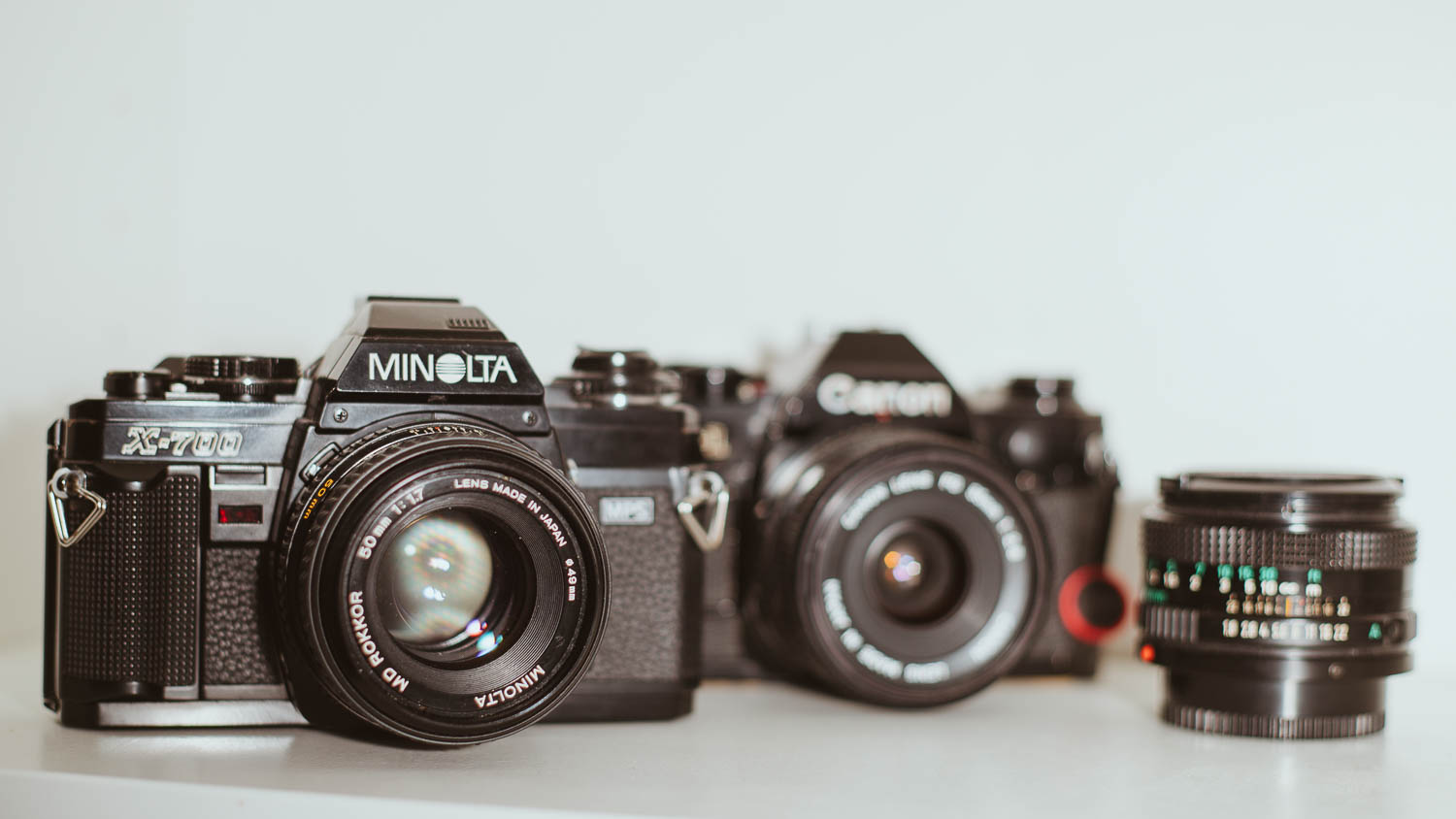
I searched classifieds and auction platforms for the Canon AE-1, but couldn't find one at a reasonable price anywhere. So my choice landed on a Minolta X-700. I think it's a fantastic camera — but that's not really the point here.
Mirror Up, Light In, Done?
I was incredibly excited when it arrived. At its core, an analog camera is beautifully simple: mirror flips up, light hits the film at the back, that's it. Without a lens and with the back open, you can watch the whole thing happen — I was so fascinated that I have no idea how many times I fired the shutter. Until, after two days, nothing worked at all.
First setback: a blown capacitor, a well-known issue with the X-700. Fortunately I found one of the last technicians in Munich who still repairs analog cameras. A week later, I picked it up and got back on track.
Ghost Reflex: Reaching for a Screen That Isn't There
Then came the first real shots. Out of habit, my eyes darted to the back of the camera after every frame — where, of course, there was no screen. I had to laugh every time. If you shoot both digital and analog like I do: this will keep happening.
I photographed pretty much everything I could find, just to fill up a few test rolls. At some point I briefly considered sending the first films off to a lab. But my stubbornness won't allow it. I want to develop them myself, even if it takes time. The longer I wait, the stronger the curiosity gets — I've already lost track of exactly what's on those first rolls. That's exactly what draws me in.
Escalation Level 1: Six Cameras, Zero Prints
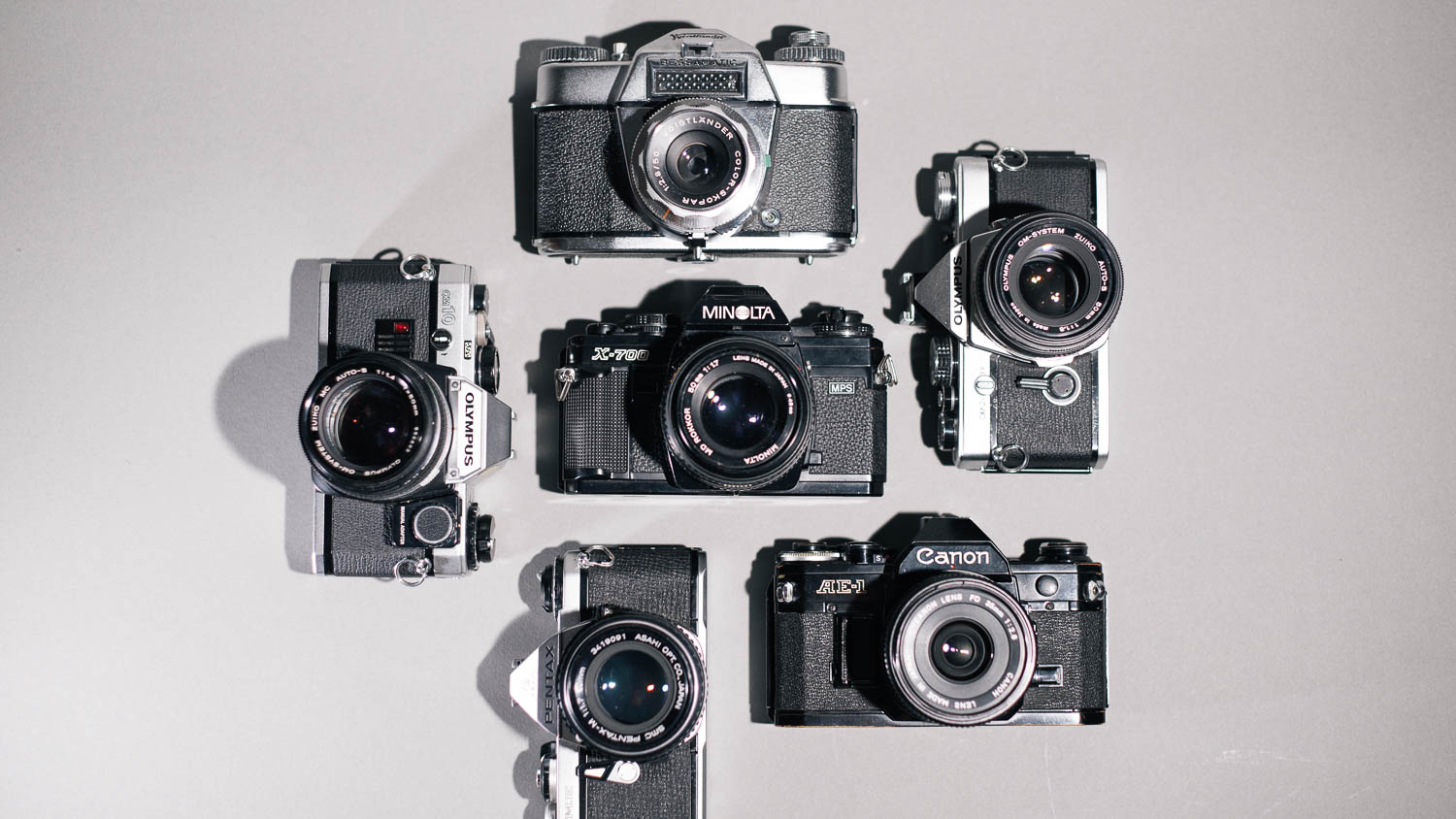
Before I'd made even the slightest move toward developing anything, Gear Acquisition Syndrome hit hard. One camera became six in no time. The Minolta was followed by an Olympus OM-2n. From my grandfather I inherited a Pentax ME Super and the beautiful old Voigtländer Bessamatic. Eventually I managed to track down a Canon AE-1 after all — and another Olympus quietly snuck in too.
The logic behind it? Hard to explain. Probably the fear that analog hardware will disappear entirely one day. Or simply the joy of the mechanics.
Six cameras. Six full rolls of film. I can't wait.