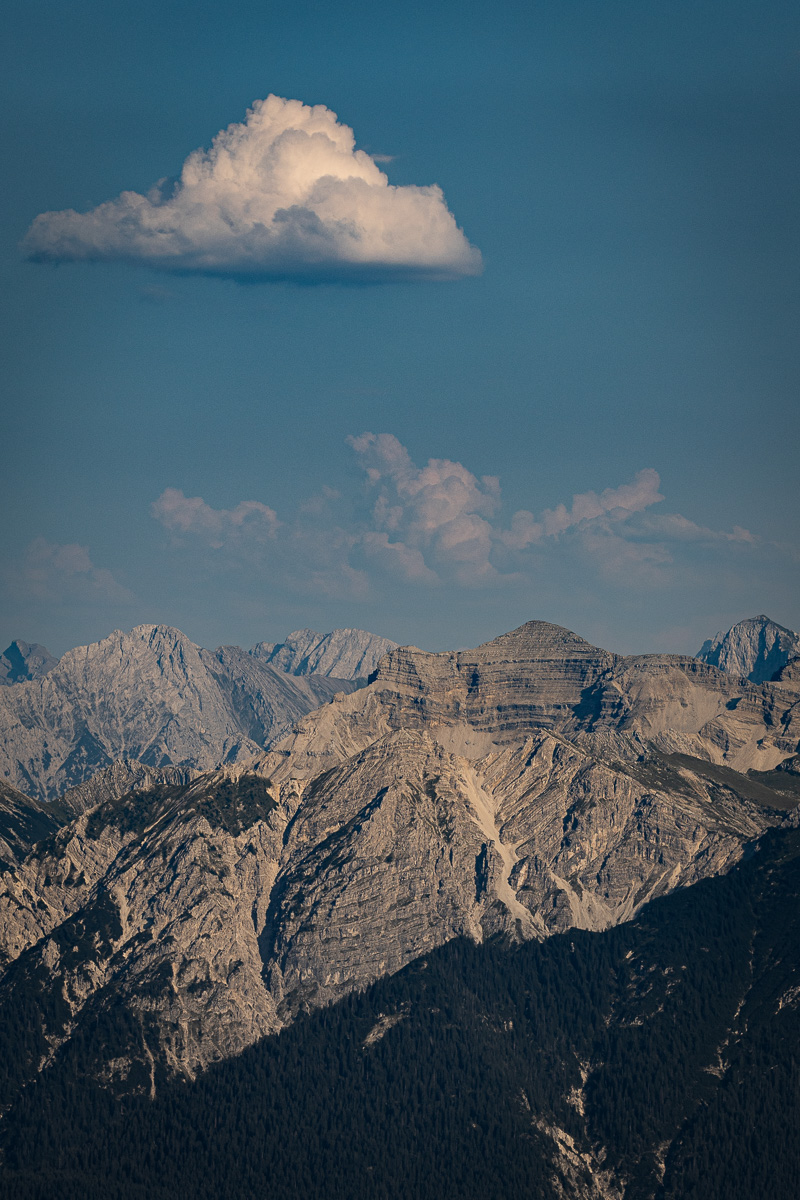
The idea was simple: spend a night above 2,000 metres and take in whatever the hours between sunset and sunrise had to offer. Stars, maybe the Milky Way, the first light of day. Maybe some wildlife. Maybe nothing at all. Because the truth is: there's no guarantee of a good photo.
That was exactly what made the trip appealing to me. Astrophotography was largely new territory, and I'd never spent a full night outdoors on a mountain before. Of course I'd done my research, checked apps, and prepared as much as possible for the conditions. Still, a large part of the night remained uncertain.
The usual dilemma of any photo trip showed up already while packing. On one hand I wanted to keep as many options open as possible. On the other, everything had to be carried up the mountain. Unlike a road trip or a quick photo session in the city, weight suddenly becomes a very decisive factor over roughly 1,500 metres of elevation gain.
So, gear kept migrating in and out of the backpack more than once. Do I really need this lens? What matters more: another lens or more water? Another battery or the gloves? While the photographer in my head wanted as many options as possible, the more sensible part kept reminding me that a night on the mountain is, first and foremost, not a photo trip but a hike.
When the Plan Nearly Fell Apart
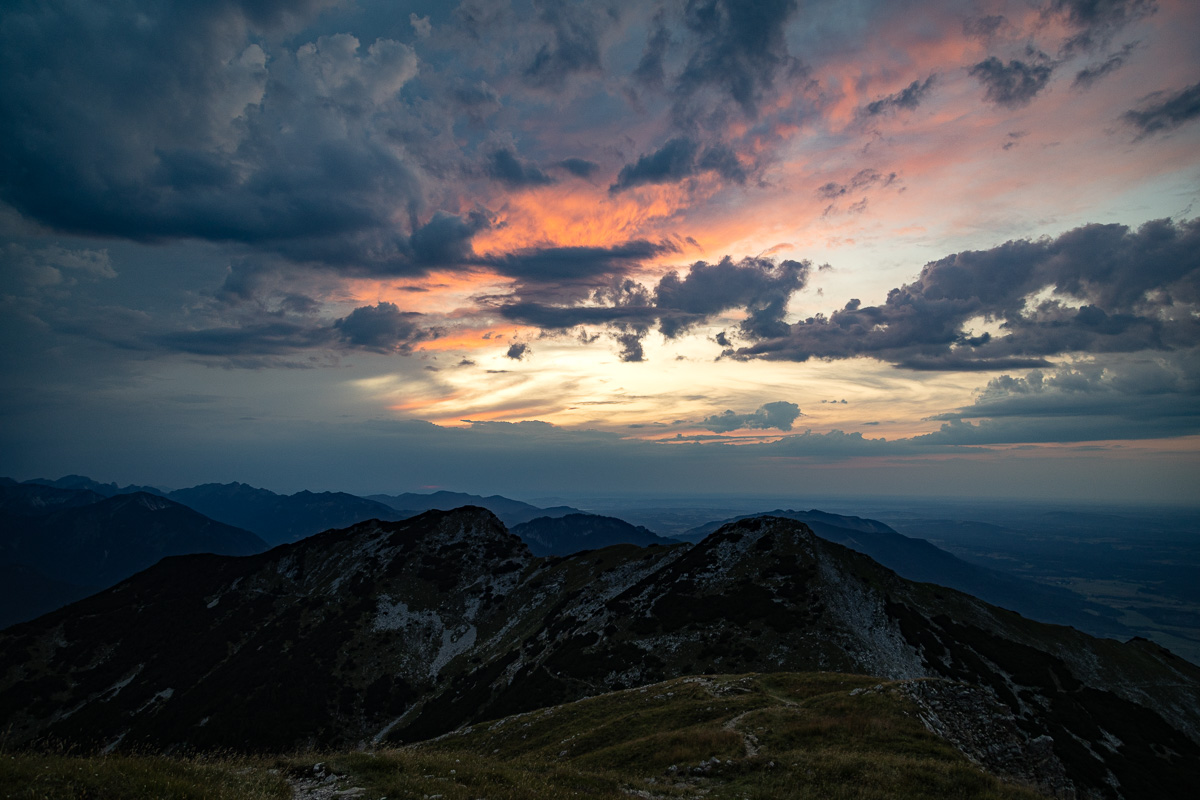
Once up there, it didn't look like a successful night was on the cards. Lightning flickered on the horizon, dark clouds pushed over the peaks, and the weather app got checked far more often than usual. The storm passed on the opposite side of the valley, but the sky stayed unpredictable. Gaps in the clouds opened and closed again minutes later.
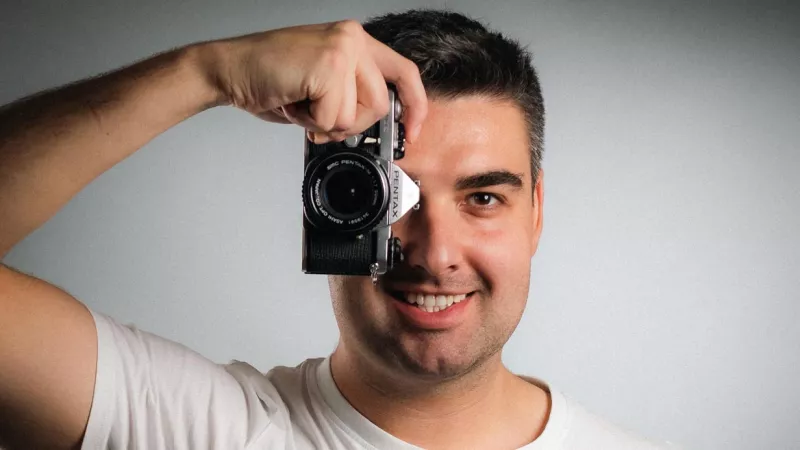
Until sunset I passed the time with a few shots. Aside from a single butterfly, no animals showed themselves. Instead, I ended up with a handful of self-portraits – and of all moments, that's when I thought of the 85mm lens that, after being packed and unpacked several times, had ultimately stayed at home. At the same time, the 150-600mm kept coming out too. Not necessarily because I needed it, but because once you're carrying over two extra kilos of lens, you automatically start looking for reasons to justify the decision to yourself.
As darkness set in, little changed. The forecast said the sky should clear around midnight, but there was no sign of that yet. So, all that was left was waiting. My eyes kept drifting upward. At some point I more or less gave up on the idea of star photos for the night and lay down.
Around 2am I checked outside again. This time the forecast had been right. The clouds broke apart, more and more stars became visible between them, and within minutes it was clear: if I was already up here, there was no excuse left. Out of the sleeping bag, back up to the summit.
Between Sleeping Bag and Starry Sky
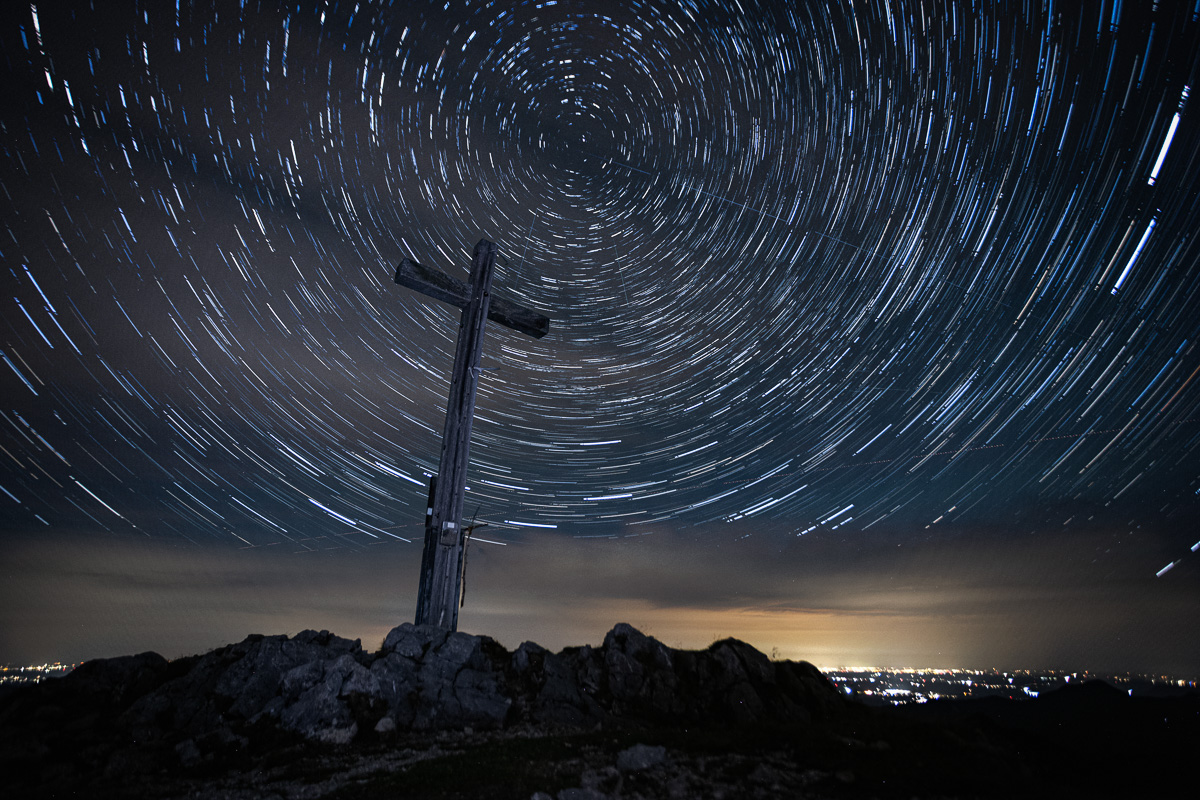
A little later I was standing at the summit cross again. My goal was a star trail. Years ago I'd captured star trails once, more or less by accident – this time I wanted to approach it properly. I'd taken notes beforehand, researched settings, saved different workflows. In practice, it still started with trial and error.
Finding a good composition in the dark turned out to be harder than expected. Test shots followed, then focus corrections, then more test shots. I briefly lit the summit cross with my phone during a few exposures so it wouldn't just end up as a black silhouette in the final image. Somewhere in between I realised I'd completely forgotten the app for aligning with the stars. By that point it didn't matter anymore – the interval sequence was already running.
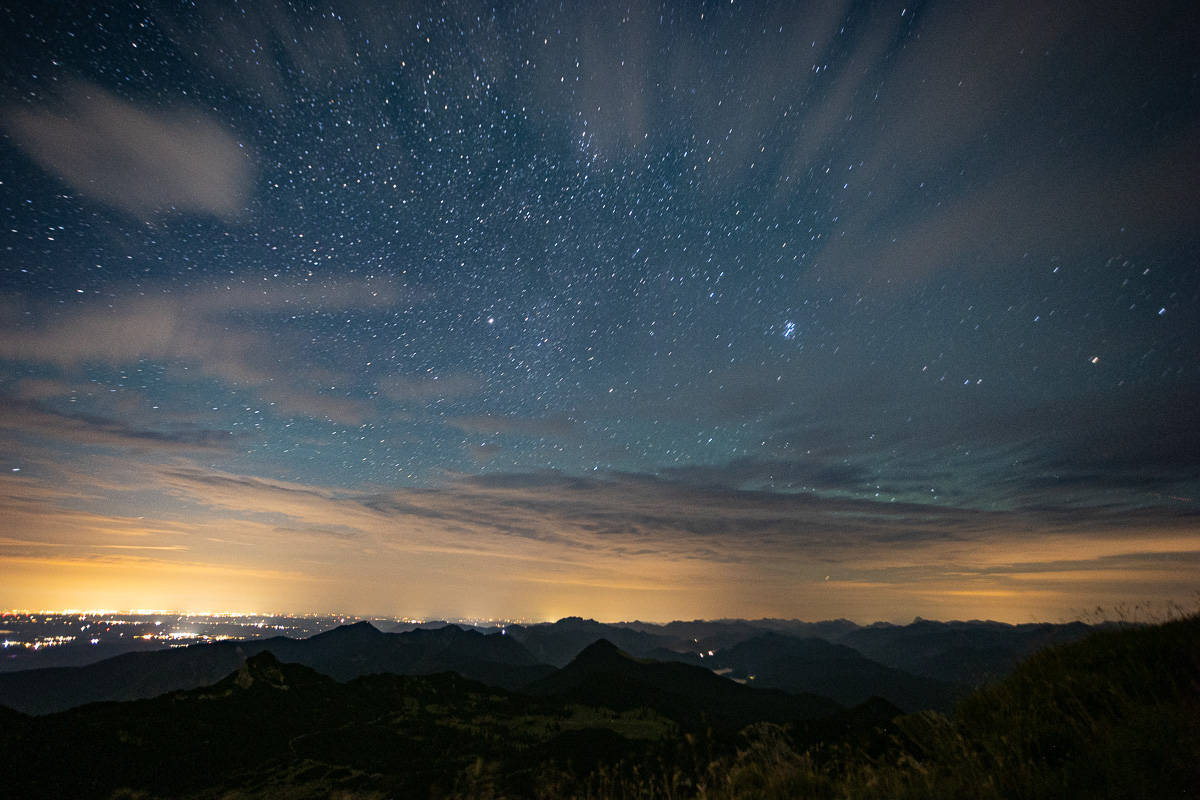
Now it was a matter of waiting. Only occasionally interrupted by a glance at the screen to check the camera was still doing what it should. What the final image would actually look like, I had no idea at that point – that would only become clear later at the computer. In that moment I was simply glad the clouds had left room for the stars after all.
Just before 4am the camera went back into the backpack. A few hours remained until sunrise. Or at least the attempt to get a little more sleep.
Almost Missed It
When the alarm went off around half past five, motivation was limited. After the night at the summit and the star trail just hours earlier, the sleeping bag felt considerably more appealing than anything waiting outside.
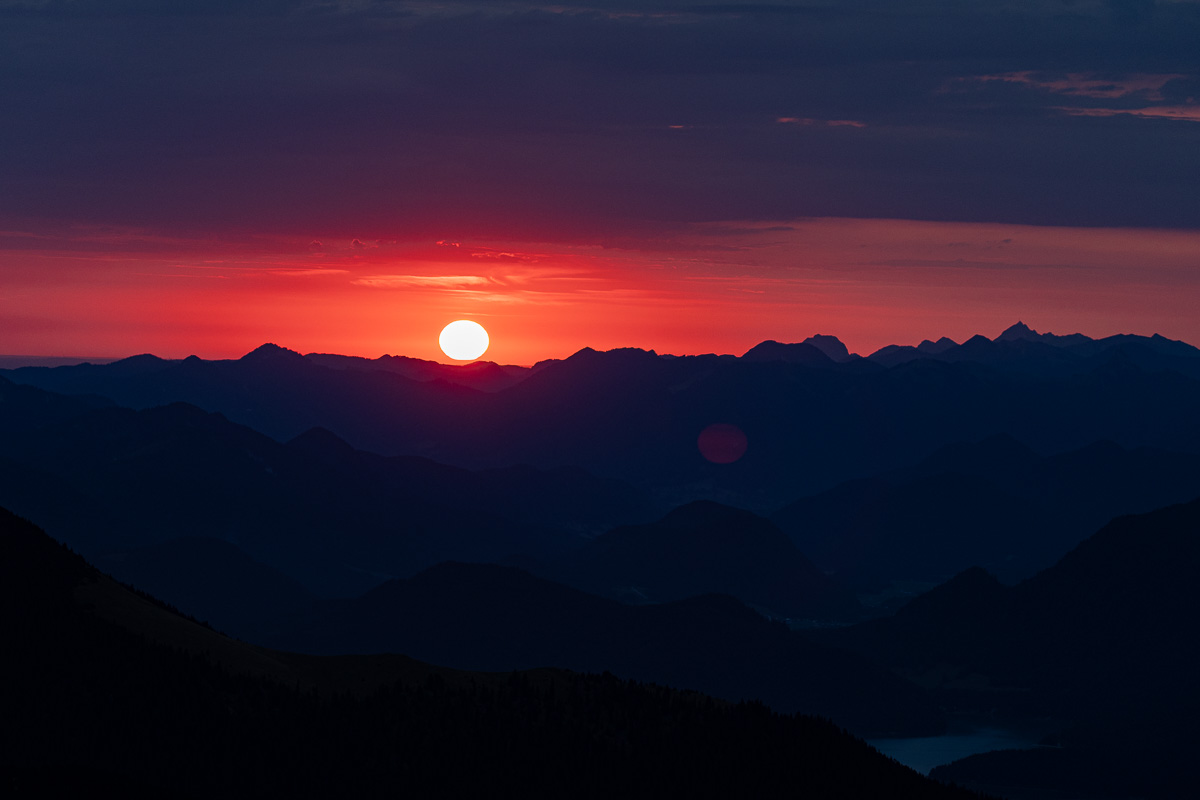
So I stayed lying down for a moment and watched the glow on the horizon. The first shots happened straight from the sleeping bag. But when I looked toward the horizon again shortly after, it was immediately clear that staying put was no longer an option. A deep red sun rose above the mountain ridges, noticeably larger than I'd ever seen it before. Moments later I was back on my feet, heading toward the summit.
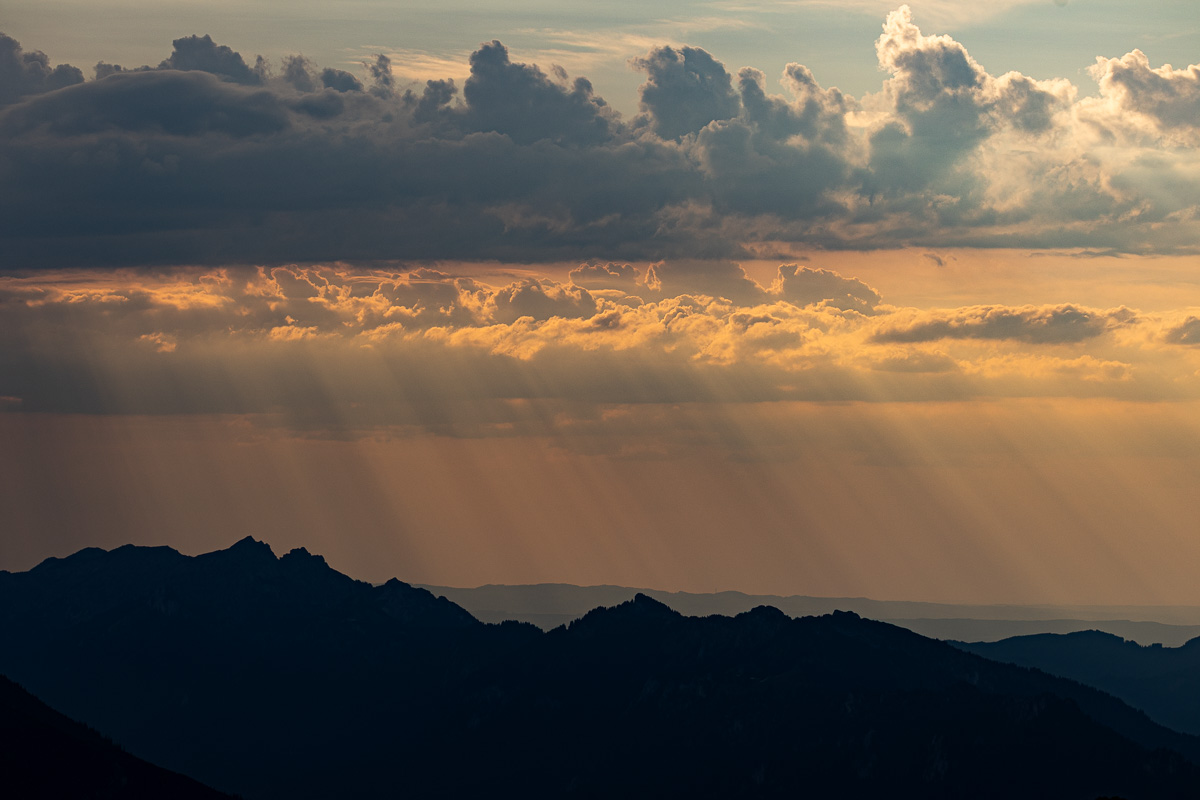
There, the telephoto lens finally showed exactly what it was capable of. At 600mm the sun pushed up like an enormous fireball behind the dark mountain silhouettes. One of those moments that's just as impressive in reality as it later is in the photo.
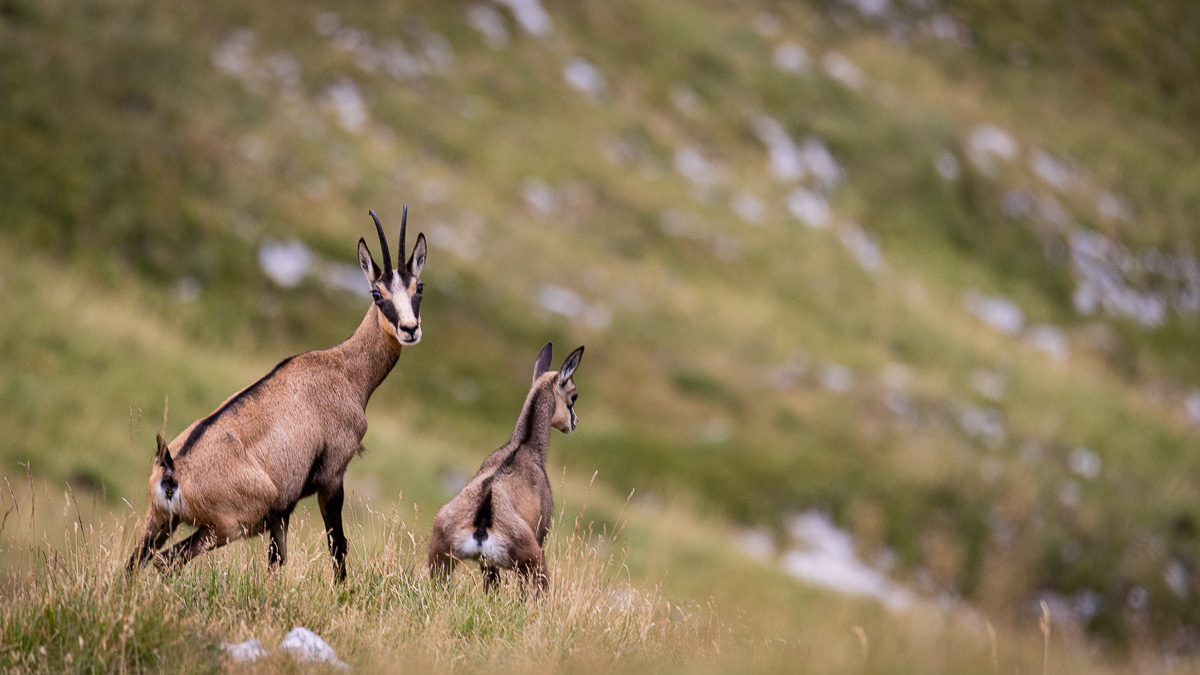
As if that wasn't enough, several chamois appeared on the slope shortly after. This was exactly the kind of encounter the big telephoto had come along for in the first place. After all the back-and-forth with myself while packing and the extra kilos on my back, my instinct was proven right in that moment. It had been worth it.
The way back down finally gave me time to look back over the past hours. A lot had gone differently than planned. Some decisions had turned out right, others I'd probably make differently next time.
The night was uncomfortable, the sleep too short, the wind annoying. And still: every second of it was worth it. Because of the photos. But mostly because of the night itself.
Sunset to Sunrise