Illustration
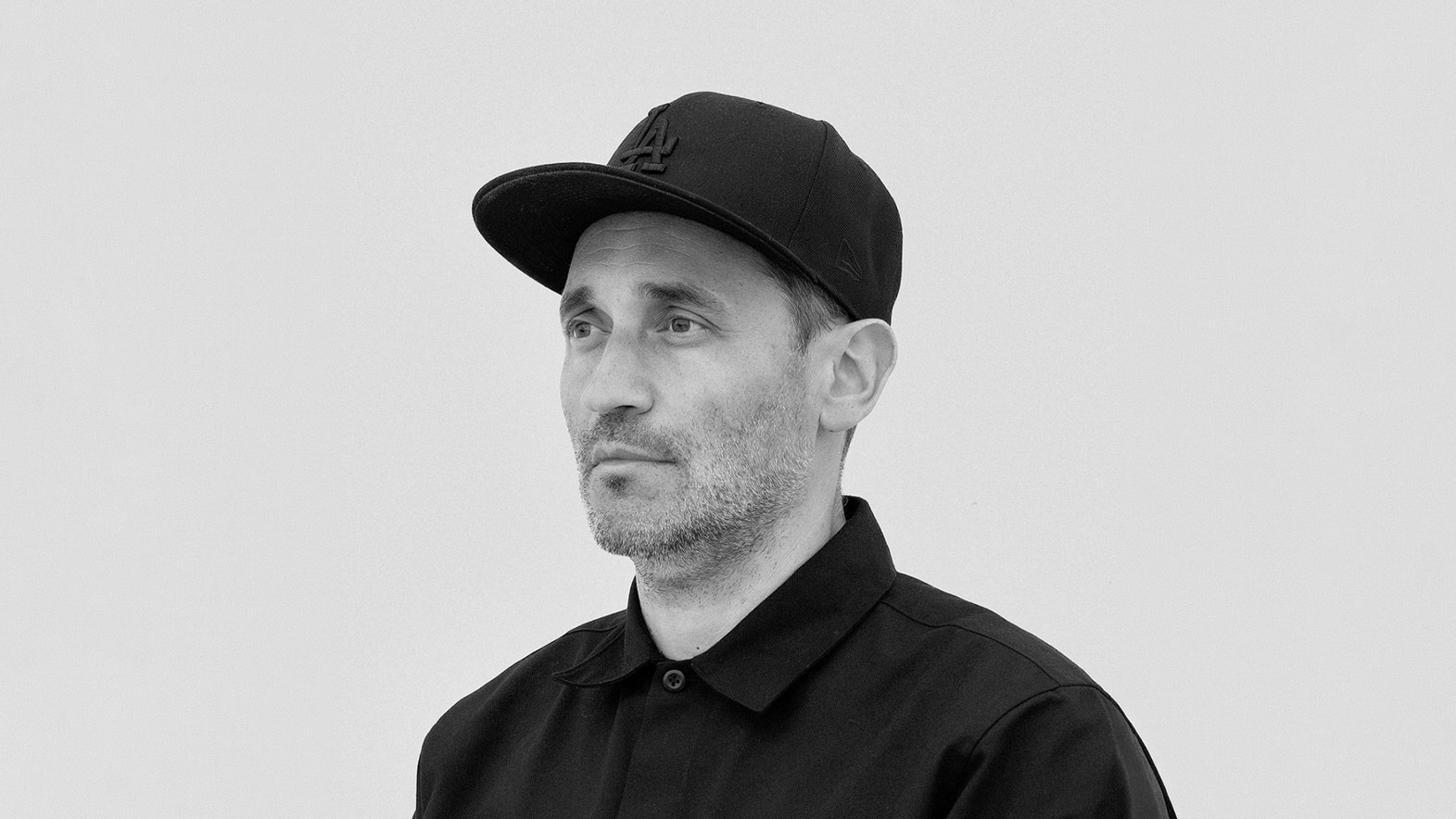
Jose Navarro has worked in advertising for over 25 years and has kept up his own illustration practice alongside it. Under the name Yuxtapoems, he has shared conceptual editorial illustration and visual poetry on Instagram since around 2017. His work has led to commissions from publications around the world, including Die Zeit.
Q How did you get into making this kind of work?
I’ve been working in advertising for over 25 years, while consistently nurturing my own illustration practice alongside it. I’m particularly passionate about conceptual editorial illustration and visual poetry, and over the years, I’ve continued to develop personal projects exploring these areas, sharing them on Instagram since around 2017. Gradually, this has helped me build a stronger presence and gain international recognition, leading to a range of editorial illustration commissions for publications around the world.
Q Tell me the story behind the name yuxtapoems.
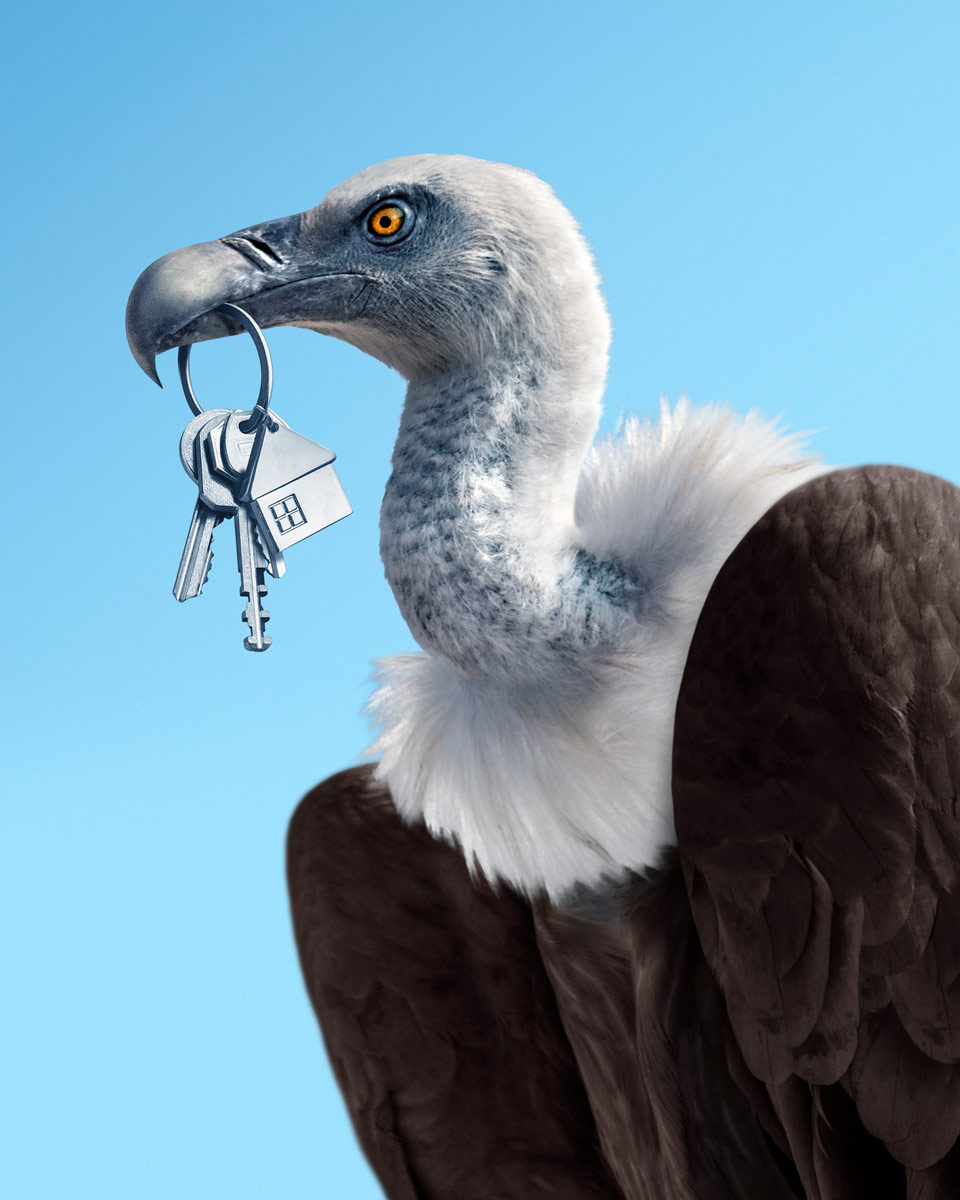
The term “Yuxtapoems” is a fusion of the words “juxtaposition” (yuxtaposición in Spanish) and “poems,” coined to define my illustrations as a form of visual poetry, in which different objects and concepts are brought together to create unexpected connections and layers of meaning. It initially came about as the title of one of my exhibitions, but eventually became the name of my Instagram profile.
Q Ideas can show up at the strangest moments. Which one caught you most off guard?
This is a difficult question to answer, as I don’t follow any particular formula when it comes to generating ideas. What consistently informs my creative process, however, is a deep sense of curiosity and a keen eye for observation. I’ve always been fascinated by semiotics and by the multiple layers of meaning that lie beneath images and symbols. I particularly enjoy uncovering these hidden meanings and exploring the unexpected connections that emerge between them.
Q Once an idea is there, you need the right pieces for it. What do you do when they don’t exist?
My work is almost always rooted in photography, although I’m not a photographer myself. I’m drawn to depicting objects in a highly descriptive and idealised way, an approach I believe stems from my background in advertising. For this reason, most of the images I use as a starting point come from stock photography. When a project calls for a very specific object, I may commission a photographer to capture it or create it in 3D. Once I have the source images, I work on them in Photoshop, carefully editing and refining the elements until the final illustration takes shape.
Q What makes an everyday object interesting enough to end up in one of your artworks?
Any object can become fascinating when removed from its usual context or approached from a different perspective. For me, the real interest lies not so much in the object itself, but in how it can be reimagined and used to tell a story that is unexpected, surprising, or even open to a new interpretation.
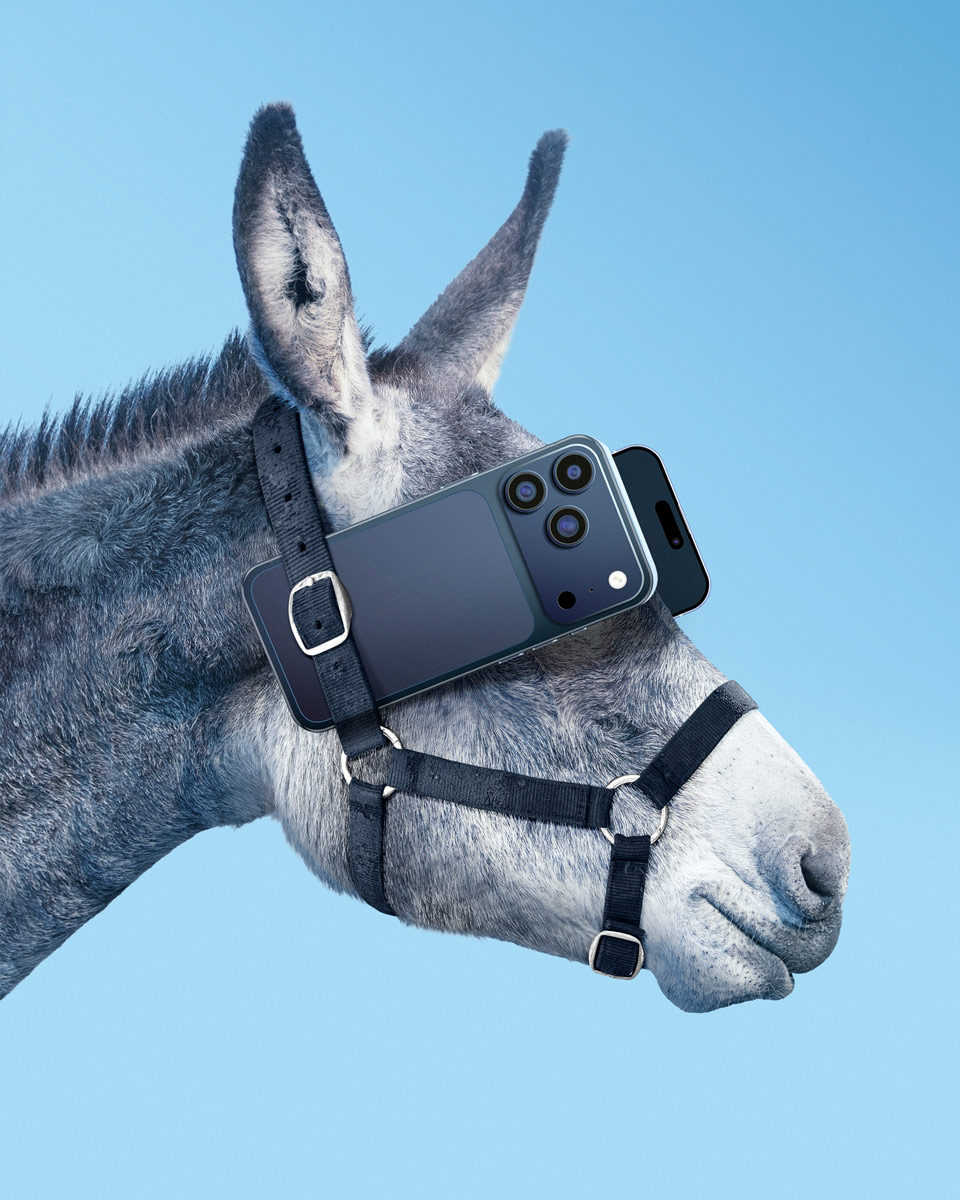
Q Is humor the point of an artwork for you, or just the way in?
Humour is not an end in itself in my work, but I do consider it a powerful tool for engaging the viewer and drawing them into an image. That said, it isn’t always the most appropriate approach; its role ultimately depends on the subject matter and the story I want to convey.
Art doesn’t always have to be serious, critical or thought-provoking.
Q Some artworks are visually striking but leave little behind. How do you know when a piece carries the idea you started with?
I don’t feel that every illustration needs to carry a deeper meaning. Sometimes, the pleasure lies simply in exploring visual ideas, playing with aesthetics or experimenting with images. Art doesn’t always have to be serious, critical or thought-provoking; I think there should also be room for a more playful, purely visual approach, where the process itself is reason enough.
When it comes to knowing whether a piece communicates what I intended, I tend to trust my instincts, guided by my own experience. That said, if I’m unsure whether an image might be misinterpreted, I’ll often share it with fellow illustrators or other professionals whose judgement I value and trust.
Q Has a publication such as Die Zeit ever turned down one of your ideas? Looking back, do you think they missed something or were they right to pass?
Editorial illustration is usually a collaborative process shaped by the decisions of an entire team of professionals, from editors and creative directors to art directors and illustrators. The work is often carried out under tight deadlines, with several concepts being developed simultaneously. Ultimately, the decision comes down to what best serves the article itself.
An illustration needs to complement the tone of the piece while remaining consistent with the publication’s overall voice and visual identity. Of course, some ideas inevitably get discarded, but I don’t see this as something particularly troubling. There is usually a clear rationale behind these decisions, and the chosen direction tends to be the one that best serves the article.
That said, there have certainly been occasions when a visually brilliant idea hasn’t made the final cut. On the other hand, some of these ideas find a new lease of life when they’re revisited or adapted for a different article.
Q You build your artworks piece by piece, while AI can generate artwork in seconds. How do you look at this development?
I think this question could easily lead to an entire interview of its own, so I’ll try to keep it brief.
I believe the strength of my work lies in the conceptual stage, and in my experience so far, AI isn’t particularly good at this. It still struggles with abstract thinking and with making the kind of unexpected connections that can lead to truly original ideas. That said, with the right guidance, it can certainly produce strong visual results in a very short time.
Personally, I enjoy the entire creative process, from the initial idea to its final visual execution, so I don’t really see the point in handing over to AI the very part of the work I find most rewarding. I do, however, see it as a useful tool for automating certain tasks, such as cleaning up photographs, making selections or correcting visual imperfections, where it can genuinely save time.
Finally, there are the ethical concerns surrounding the use of copyrighted work to train AI models, as well as the enormous energy consumption of the data centres that power them. To be honest, this is the aspect of AI that troubles me the most.
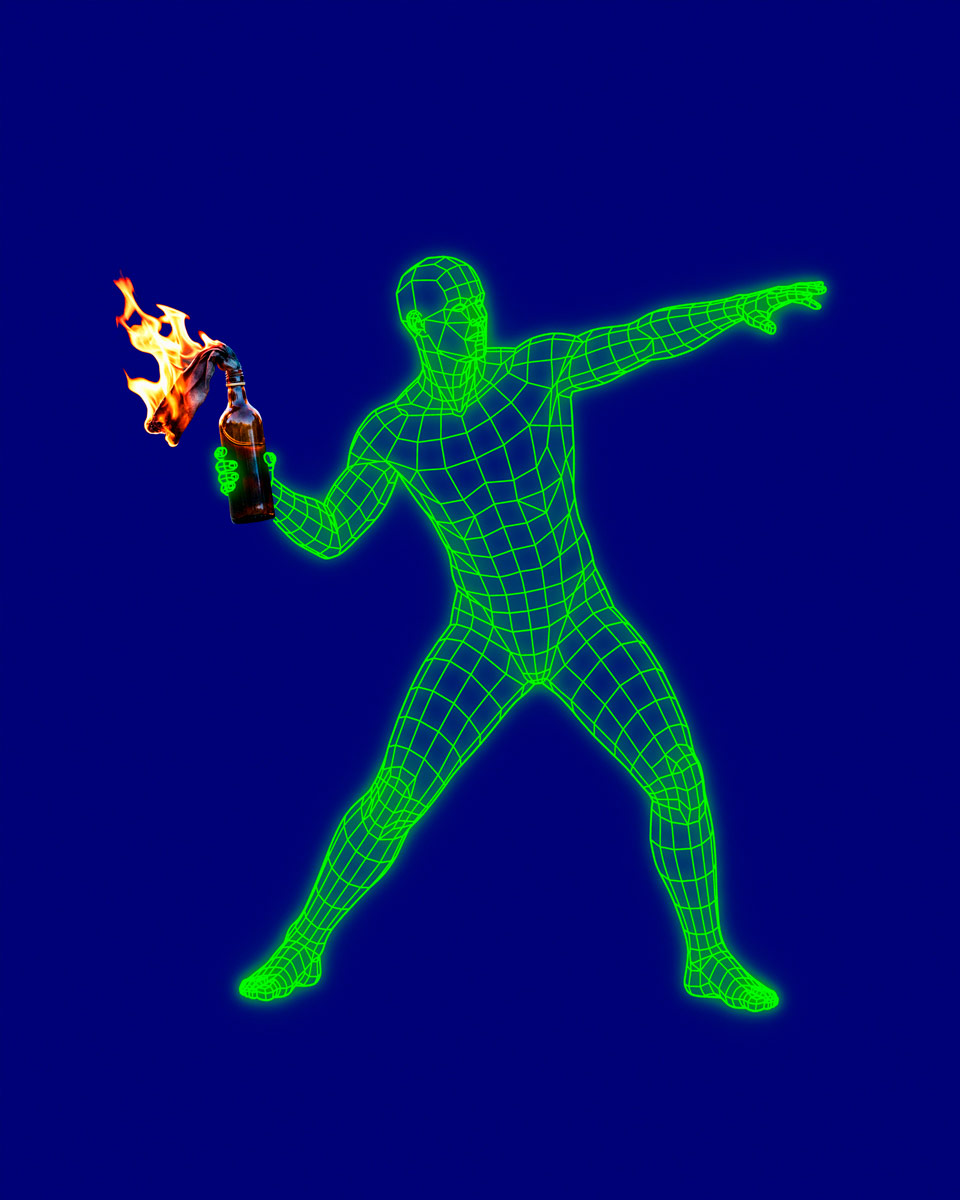
Q Is there an idea you’d love to realise but haven’t yet? What is it about?
I’d love to have the time and budget to transform some of my works into large-scale sculptures. It’s a project I’ve been considering for a while, although I haven’t yet managed to bring it to life. I think it would be a fascinating direction to explore.