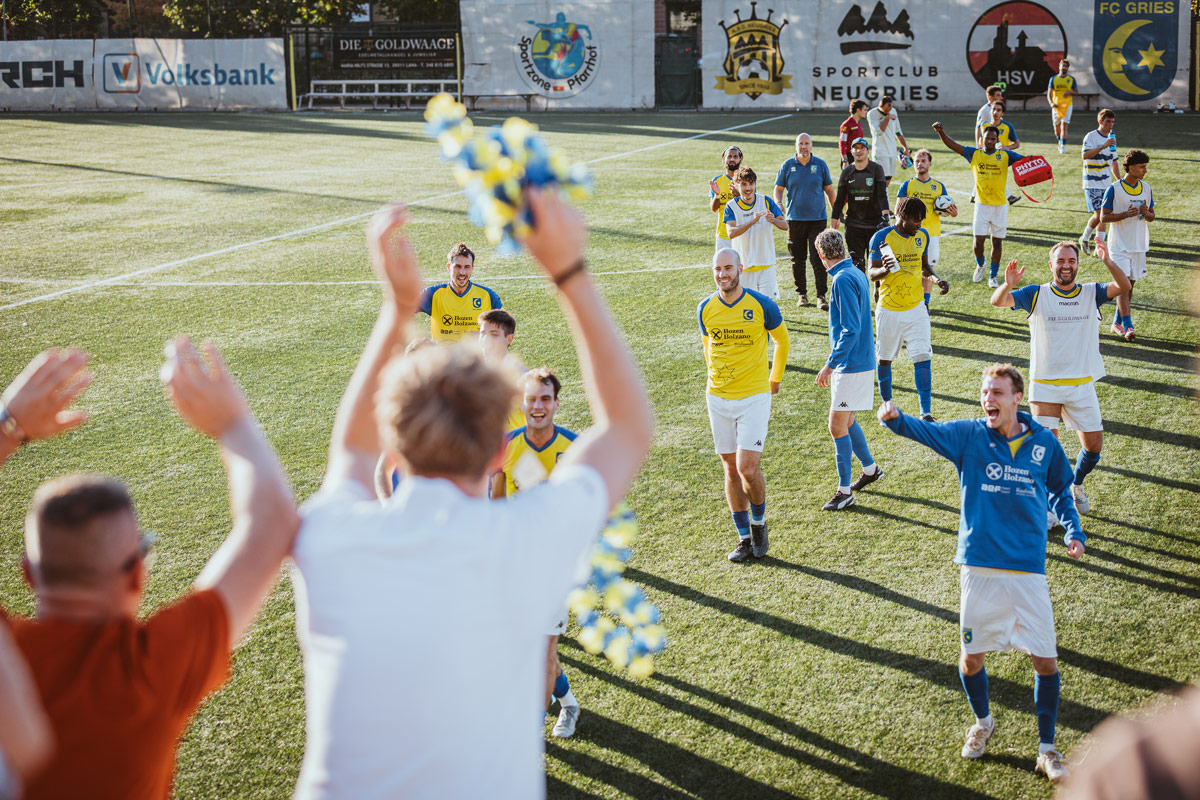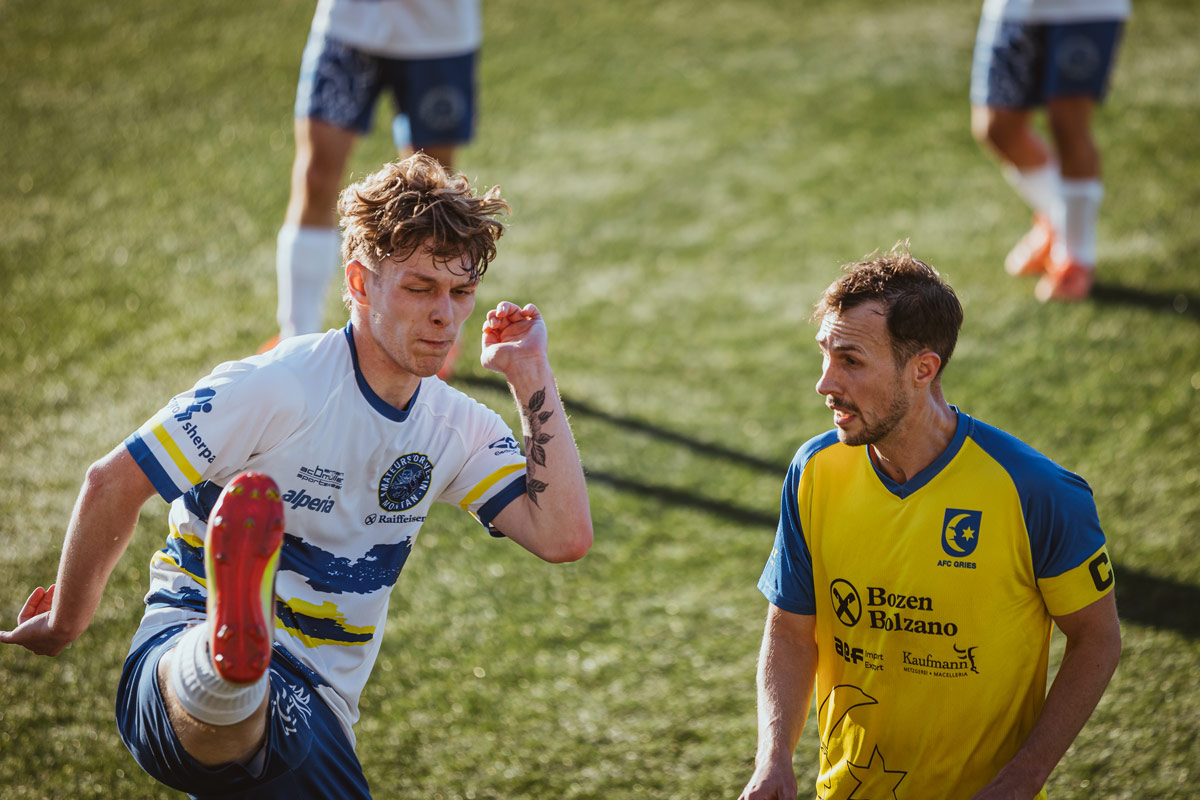
Saturday, 3 p.m. The sun was blazing down on the pitch, and the light was harsh to match. Not the light I would have chosen, but the light that was there. That was exactly the point of this attempt: not waiting for perfect conditions, but seeing what I could make of what I had.
It had taken a while to get myself to that pitch. Photographing football had been on my list for some time. But it always failed at the same hurdle: I didn’t want to just turn up at a pitch with big gear. I wanted to ask first. And then it dragged on. Sometimes the timing didn’t work, sometimes I didn’t know which club I should even ask.
This time the hurdle was gone. I was in Bolzano anyway, and my old club, FC Gries, had a home game coming up. I had played there myself for many years. A quick message to a former teammate, and it was settled. On the pitch were two more former teammates and three players I had coached back when they were still in the youth team.
Getting Into the Game
In the beginning I felt a bit uneasy in the stands with the big lenses. It took me a moment to block that out. It surely helped that I knew most of the spectators personally.
That football is fast was no surprise. How fast it feels with a camera in front of your face, I only realised when I tried to be at the right player at the right moment.
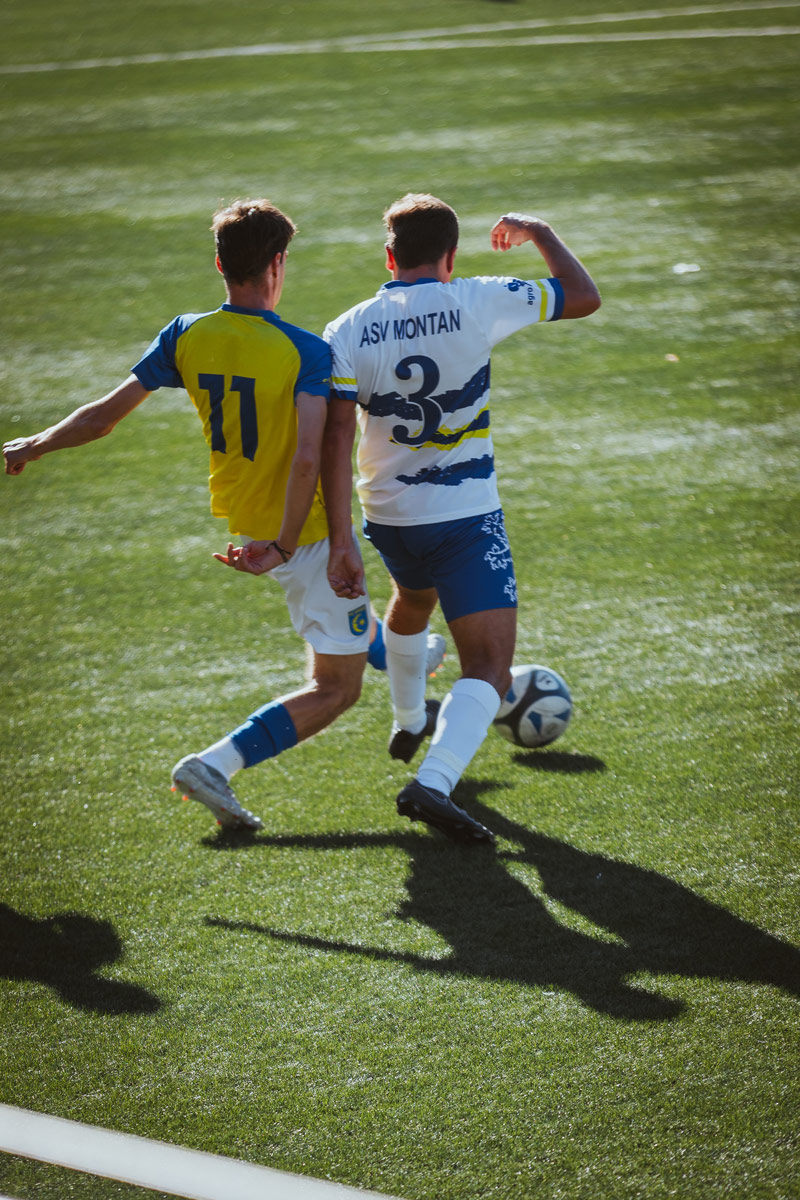
At first I was mostly busy just following the action. Over time it became more intuitive. Through the viewfinder I saw the game differently: I started looking for subjects and anticipating scenes. Where was the next pass going? Where was a situation about to develop? When was it worth framing the shot in advance?
That reminded me of my interview with sports photographer Oliver Baumgart, who does exactly this for a living. After that afternoon, I understood a little better what draws him to it. It was simply great fun to follow a game this way, even here on a small pitch in the amateur league.
It didn’t quite work out, though. For the opening goal, I stayed with a player along the touchline and still had the cross in the frame, the assist for the goal. Then I was too slow to swing to the middle. I missed the goal itself completely. What was left was the celebration huddle, in portrait and landscape, because I had told myself to mix in landscape shots and not shoot everything in portrait.
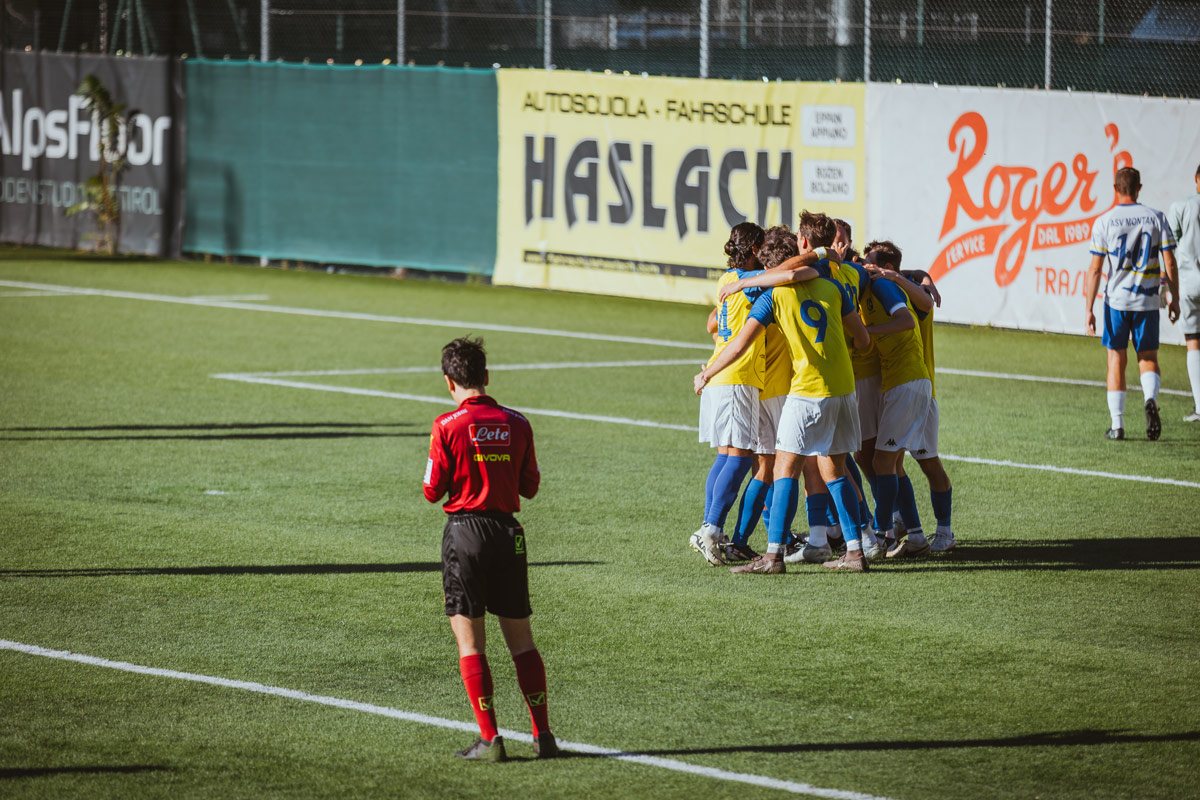
Between the Scenes
The quieter moments came easier to me fairly quickly: close-ups, details, individual players, situations where, for a moment, less was happening. There was more time to look closely and to compose a picture deliberately. And such moments came up constantly, as soon as I took my eyes off the ball.
The actual game scenes were harder. The closer I was, the faster the situation disappeared from the frame again. Especially with a long focal length, that meant over and over: zoom out, find the scene, zoom back in.
The Forgotten Panning Shot
I really wanted to try a panning shot; it had been on my list before the game. Then I forgot about it completely. Only toward the end of the second half did I remember. So I quickly changed my settings and went for it.
There was only time for a few attempts. For each run I took seven or eight frames, and only one of them had a sharp face. All the more surprised I was that there was anything usable at all. I would have liked to test two or three more panning shots. But then the game was over.
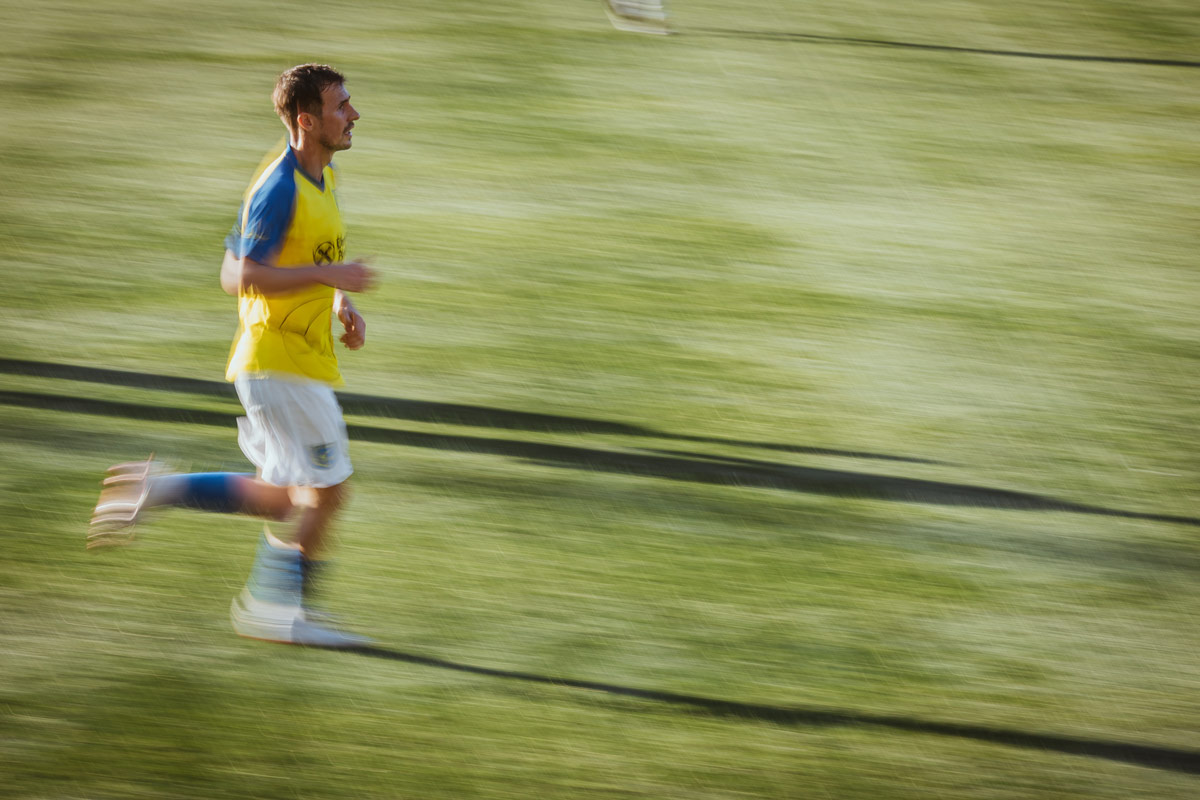
That was still the most interesting thing I took away from that afternoon: 90 minutes of constantly changing situations made for a pretty big playground. I came nowhere near using all of it, I was still too busy getting a feeling for the game in front of the camera.
Down from the Stands
What I’d change most next time is my position. I photographed most of the game from a fairly central spot in the stands. It was comfortable, and from up there I could see practically the whole pitch. For some pictures the elevated view was exactly right. What I missed were shots at eye level. A different view wouldn’t have hurt.
Next time I want to shoot at least one half directly from the touchline and generally move around more. Not wait for the game to come to my position, but look for angles myself.
I had brought the monopod from Munich to Bolzano specifically, and then didn’t take it to the game after all. I didn’t want to carry even more and figured it would work without it. It did, in the stands it was no problem. Right at the touchline it would probably have mattered more. I still felt it: after looking through the 150–600 mm for long enough, even the 70–200 felt surprisingly heavy.
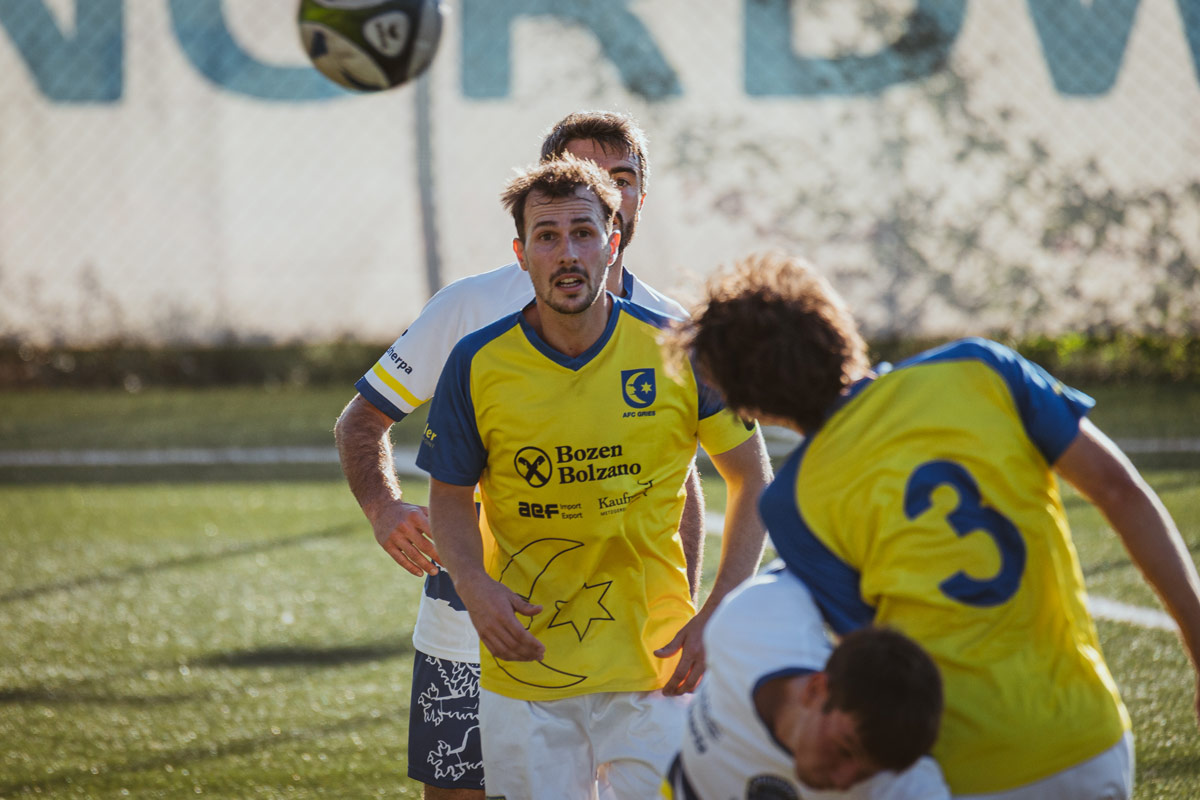
1,400 Photos Later
In the end I had roughly 1,400 photos on the memory card. I sent around 180 of them to the club. I could probably have selected even more strictly. That, too, was part of the experiment for me: only when going through them did I see which motifs repeated, which pictures really showed something and which only worked technically.
FC Gries won the game 1–0, by the way. I can’t show you the goal, unfortunately. Maybe next time.