Wildlife Photography, Alpine Animals, Landscape
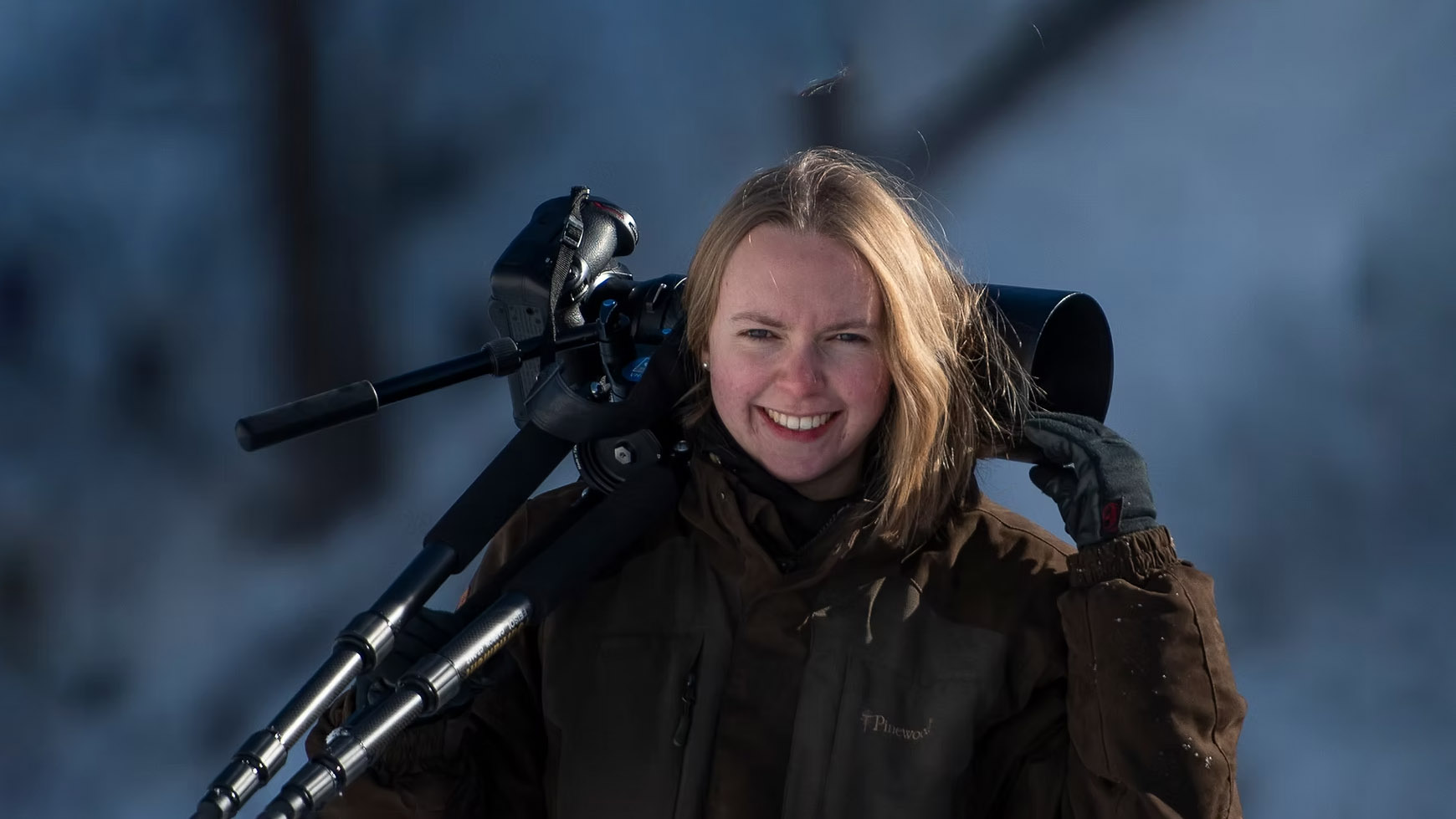
Nicole Mettler was born in 2002 in Zurich and grew up in the Alps. A camera at 16, a hoopoe in the garden – and since then wildlife photography hasn't let her go. Today she lies motionless in snow at minus twelve degrees for a black grouse shot, studies Biology, completed a safari guide training in South Africa and teaches at Nikon School CH. Her images have been recognised internationally, including at GDT Nature Photographer of the Year and Bird Photographer of the Year.
Q You got your first camera at 16 – and then it was a hoopoe in your own garden that really triggered everything. What was different about that moment compared to all the birds before?
Alongside my first steps in photography, we were covering the topic of birds at school. For the first time I became aware of how much diversity exists right on our doorstep. Suddenly I noticed a variety of birds I had never perceived before.
The hoopoe was then the decisive moment. Until then, I had only seen this species on a trip to Namibia. When a hoopoe suddenly landed in our garden, I could hardly believe it. Here in Switzerland, right outside my front door. The hoopoe is rare here and in my region is usually only observed on passage. This encounter showed me that extraordinary nature experiences don't have to happen somewhere at the other end of the world. Sometimes they begin right on your doorstep. That was ultimately the trigger for everything that followed.
Q You photograph mainly wildlife in the Alps. What fascinates you about animals as a subject – what can they show that people cannot?
The Alps are my home. What fascinates me about wildlife photography is not just the animals themselves, but also the places where they live. Many alpine habitats are remote, rugged and only reachable with a great deal of time and effort. I often spend hours on the ascent, sleep outdoors or sit in a remote spot long before sunrise. Up there, nature often still feels original and untouched – a wilderness that many people barely know.
For me, animals are a way of making this hidden world visible. An ibex on a ridge, a black grouse during the lek or a ptarmigan in winter always tell us something about the habitat in which they live. They show how perfectly they have adapted to these often harsh conditions.
That's why I try to photograph animals not just as a subject, but as part of their landscape. What interests me is the story behind the image: the relationship between animal, behaviour and habitat. A black grouse doesn't just show a bird – it also shows the fragility of alpine habitats. An ibex tells of adaptation to steep terrain, harsh winters and life in a world that is often inaccessible to us.
Q Is there an animal you've never managed to photograph – one that won't let you go?
There are several. The capercaillie, the lynx and the wolf are high on my list. These are species for which you often have to invest many years before a real opportunity presents itself.
But almost equally on my mind are subjects that would actually be far more common. Fox cubs, for example, or a black grouse in perfect backlighting during the lek. I've already taken many images of black grouse, but I haven't yet found a lek site with exactly the right conditions. Often it's precisely these unfulfilled ideas that keep motivating you to go out again and again.
Q Wildlife means: waiting for hours, bad weather, often nothing. What goes through your mind in those moments?
Everything and nothing at once. Most of the time I actually enjoy these moments. Waiting, cold, wind or bad weather are simply part of wildlife photography. For me it also means leaving your comfort zone – getting up early, taking on long and strenuous ascents, bivouacking outside and sometimes getting by on little sleep.
But when I'm out in nature, I can switch off remarkably well. I stop thinking about university or other commitments. It's just about the moment, about the here and now. It's often in these quiet phases that new ideas for images or projects emerge. Creativity frequently comes when nothing seems to be happening.
No image in the world is worth disturbing an animal.
Q You completed a safari guide training in South Africa and study Biology. How does this knowledge change your view through the viewfinder – do you see differently from someone who "just" photographs?
I often spend just as much time observing as I do photographing. Understanding animal behaviour is for me one of the most important aspects of wildlife photography. Because the most compelling images frequently arise when you can already tell what's going to happen next.
When I know what behaviour an animal is likely to show or where it will move next, I can position myself accordingly and capture the moment better. Honestly, I've learned much of this not at university, but out in the field through countless hours of observation.
From the safari guide training I learned above all to read tracks and find animals through indirect clues. That was probably the most valuable skill I took away from it.
Q At 23 you're already an instructor at Nikon School and have won multiple awards. Does that feel "strange" – or is age simply irrelevant in photography?
Not at all, really. For me it's above all a great privilege. I'm very happy to be able to work with Nikon and share my enthusiasm for nature and photography with other people. I don't think age plays a decisive role. You can learn from others at any age and at the same time pass on your own experiences. What matters is curiosity, passion and the willingness to keep learning.
Q Ethics in wildlife photography is a major topic – where do you draw the line between the perfect image and the animal's wellbeing?
The line is very clear for me: as soon as I notice that an animal is perceiving my behaviour or even showing signs of stress, I stop. No image in the world is worth disturbing an animal. With my photography I want to show nature as it is – calm, authentic and undisturbed. That's exactly how my behaviour outdoors should be too. That's why I often work with camouflage, keep enough distance and adapt to the animal, not the other way around.
Q Which image has cost you the most – patience, cold, nerves?
I can't name a single image. Black grouse photography in particular has cost me a great deal of patience and perseverance. For it I often get up at four in the morning week after week, arrive at the lek before the first bird and don't leave until the last one has gone. Two years ago I spent several days in the snow at temperatures of around minus twelve degrees. At times I lay motionless in camouflage for four to five hours. I had never experienced such cold hands and feet before.
Another experience was with the ibex last year. Because the cable car wasn't running, I had to ascend over 1,300 metres of altitude with around 28kg of equipment. The climb was tough, but the images later turned out to be among the best ibex shots I've taken so far.
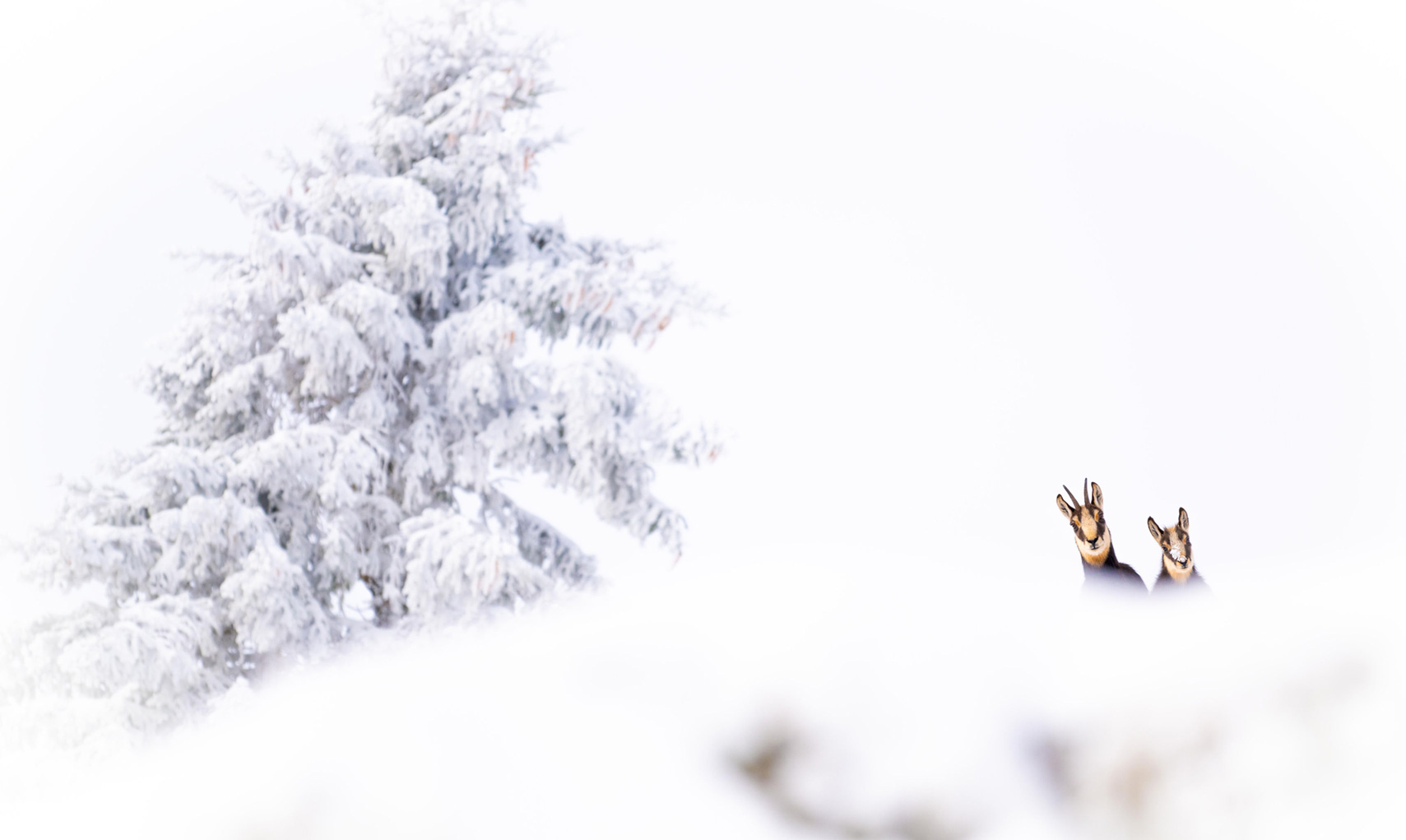
Q Which image – yours or someone else's – has genuinely moved you recently, and why?
I'm moved above all by images that convey a special atmosphere, show extraordinary behaviour or came about in a creative way. Often it's not the technically perfect shots, but those that trigger emotions and tell a story.
Among my own images, the ones that tend to carry the greatest meaning are those into which particularly much time, patience and personal experience have gone. They remind me of the experiences behind the photo, not just the finished image.
Q What should people feel when they see your work?
Above all, enthusiasm for nature close to home. Many people are surprised when I tell them that my images were taken almost exclusively in Switzerland. They're often not aware of the fascinating species and landscapes we have right on our doorstep. With my photography I want to encourage people to perceive their surroundings more consciously and experience nature with open eyes. You don't have to travel to the other end of the world to have extraordinary nature experiences.
If my images trigger wonder and make people pause for a moment, then I've achieved my goal. At best, this also creates a stronger connection to nature and the desire to protect these habitats.