Landscape, Nature
Eberhard Grossgasteiger lives and works in one of the northernmost municipalities of South Tyrol – an IT professional by day, entirely devoted to landscape photography by passion. His images on Pexels and Unsplash have been viewed billions of times, without any marketing or agency behind them. His creed: simplicity – compressing the essential into what's simple.
Q You have a job in IT, live in one of the northernmost municipalities of South Tyrol, and your photos on Pexels/Unsplash have been viewed billions of times. Did you ever expect that – and what do you think makes your images so universal?
True, in the second-northernmost municipality (laughs) – only Prettau lies further north. I never thought about that, sounds like a cliché, but who expects something like that? What makes my images distinctive? Never oversaturated colours, black and white tones always faded, muted highlights, raising the black point on the curve, combining complementary colours whenever possible.
Q Have you ever thought about making photography your profession – and what kept you from it, or made you decide to leave it as a hobby?
Not so far. When I retire and the IT projects are no longer obligatory, I think I'll prioritise photography as my "retirement occupation."
Q You say you're addicted to photography. What happens inside you when you can't photograph for a day?
A few years ago it was unthinkable to go a single day without photographing, but like everything, with routine and everyday life it has lost some of that "addictive" urgency. I'm still fascinated by photography, and I can only quote my own motto: Photography is so incredibly complex, although seemingly simplistic.
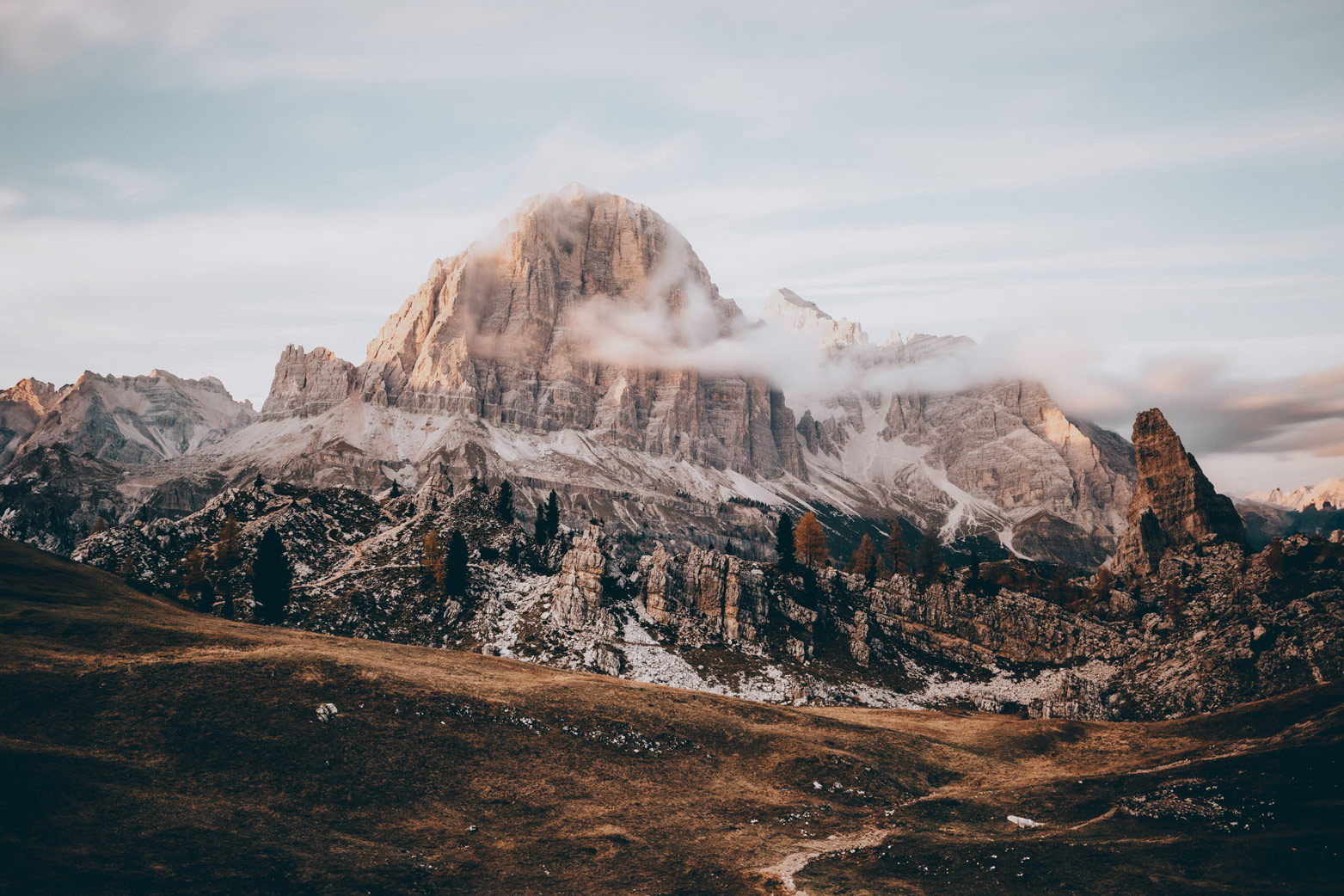
Q Your creed is simplicity – reduction as the highest form of photography. How did you arrive at this conviction, and what does it mean in practice when you look through the viewfinder?
I usually answer it like this: "A good photo is one a viewer looks at – it fascinates them, but they can't explain why they like it." It's the art of not just photographing what others think looks beautiful as a subject, but photographing the everyday, the overlooked, in a way that feels harmonious in colour and meaning. Compressing the essential into simplicity.
Q You photograph exclusively nature and landscape – never people, never cities. Is that a conscious choice, or simply what suits you?
Earlier it was conscious; later I grew more curious and also photographed people and architecture, but I quickly understood that people or street photography, in the age of "super privacy," becomes far too complicated and demanding. Every person you photograph requires their consent – not for me. I do think landscape photography suits me especially; I have a particular feel for colour and composition.
Q You live surrounded by one of the most beautiful landscapes in the world. Is there a risk that at some point you stop seeing it – that the extraordinary becomes ordinary?
No, I always describe myself as a creative, beauty-loving pragmatist who always keeps simplicity in focus when capturing the everyday visual environment around him. That implies the extraordinary doesn't become self-evident, doesn't it?
Q Is there a place, a peak, a valley in South Tyrol you keep returning to – not because it's the most well-known, but because it won't let you go?
If I think about it, it's Rein in Taufers, a side valley of the municipality of Sand in Taufers. The nature there is, in some way, a perfect symbiosis of mountains, forest, seasons, weather, light – different every time, always beautiful and "moody," but never quite like at home in the Ahrntal. Whenever I want to photograph and have no plan, I drive to Rein.
A good photo is one a viewer looks at – it fascinates them, but they can't explain why they like it.
Q In an interview you once said: better to invest in a good lens than an expensive body. What was your own costliest equipment mistake?
Definitely – a good lens is always better than the most expensive, top-tier full-frame camera. If I had to choose between a professional full-frame camera with a standard zoom, or an APS-C camera with a fast, expensive lens – you surely know the answer. You only really learn photography with fast lenses. Back then, I found my compromise with a Canon 50mm f/1.8 to refine my skills. My "most extreme" bad investment was definitely buying a cheap 24-70mm standard zoom for my first DSLR, a Canon EOS 70D. I think it was a Tamron, around 400 euros new – absolutely dreadful quality!
Q AI can generate mountain panoramas at the push of a button today. Does that threaten landscape photography – or is that the wrong question?
Difficult, difficult! Somehow I do think AI is displacing landscape photography in the way we've understood it until now. Maybe it will end up that there are separate categories – traditional landscape photography, backed by proof that it wasn't AI-generated, and AI photos as their own thing.
Q With Narrateography you've combined your photos with quotes and poetry – image and word as a shared language. How did this collaboration come about, and what does it give you that a photo alone can't?
Let's put it this way: I actually found my literary soulmate, my photographic ghostwriter – Angie Weiland-Crosby from Maryland in the US – who can put my images into words and quotes. When I read the quotes she writes for my photos, I always think: that's exactly how I thought of it, only she, as a writer and author, can naturally put it into words even more beautifully in her native English and evoke emotion. Quotes on images reveal a different soul of the picture – AWC does that masterfully.
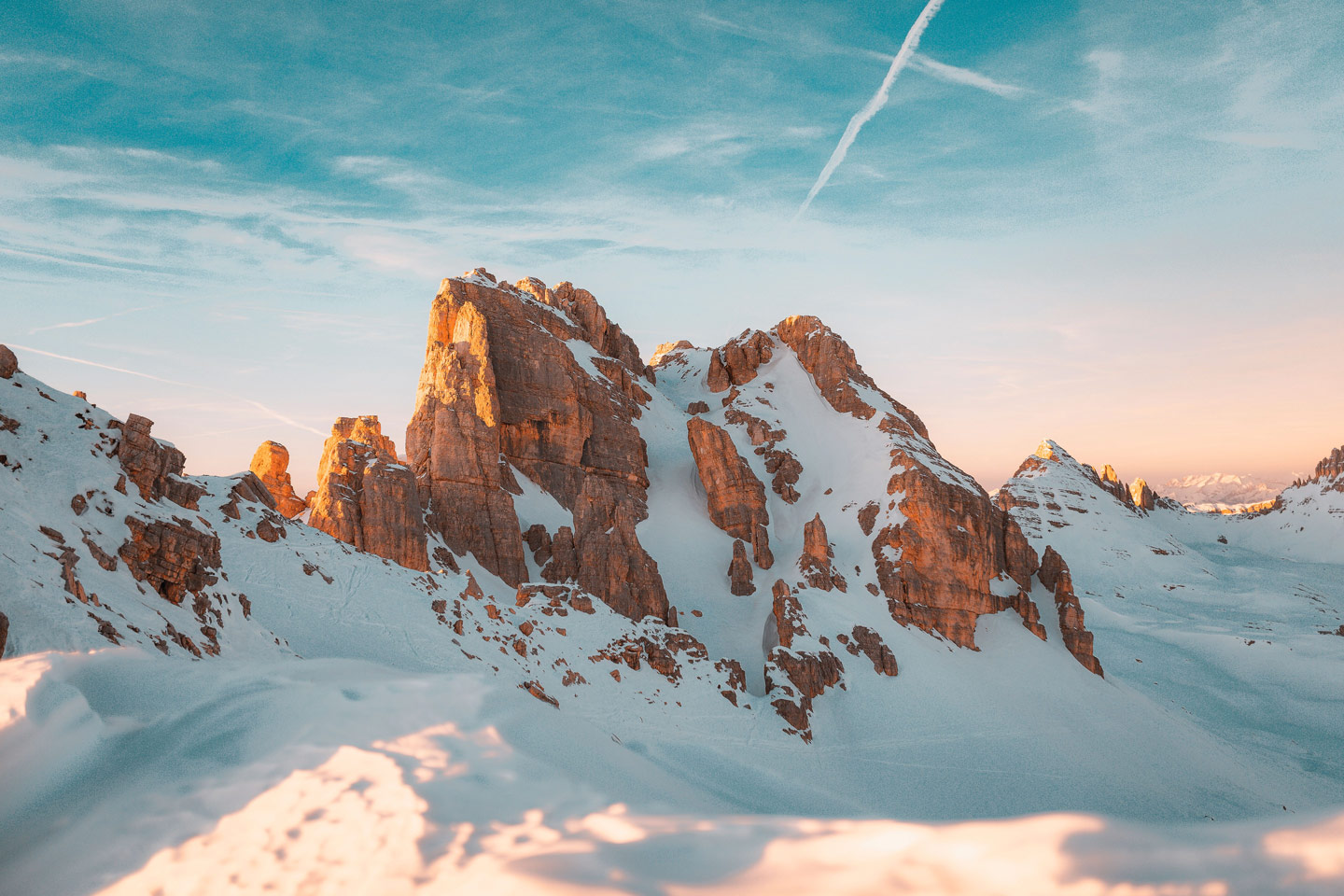
Q What do you want people to feel when they see your work?
As I said before, the images should simply touch them, spark an unconscious emotion. They look at the pictures, maybe they don't even like them, but something fascinates them anyway. They don't know what it is, but it holds them invisibly, bound to the simplicity of what my photography says.